Technology
HDD vs SSD: what’s the difference?
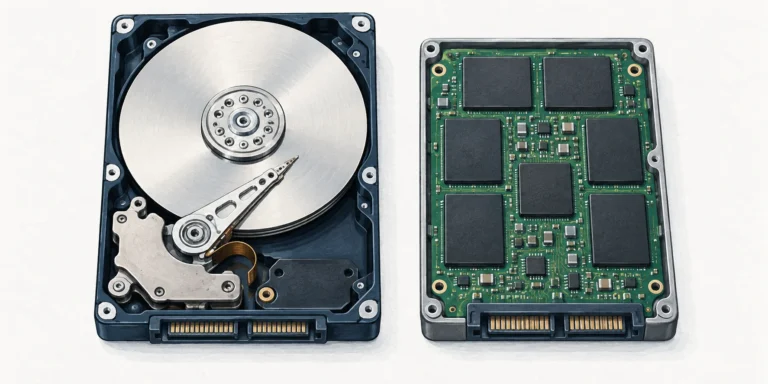
An HDD stores data on spinning magnetic platters; an SSD uses electronic flash storage. That changes access time and mechanical behaviour, but compatibility and copy speed need separate checks.
Explore & compare
Explore comparisons about Technology, with explanations of important differences, practical examples and sources.
An HDD stores data on spinning magnetic platters; an SSD uses electronic flash storage. That changes access time and mechanical behaviour, but compatibility and copy speed need separate checks.

A Chromebook is a type of laptop running ChromeOS. The useful comparison is with Windows or macOS laptops, especially the apps, offline tasks and update life you need.
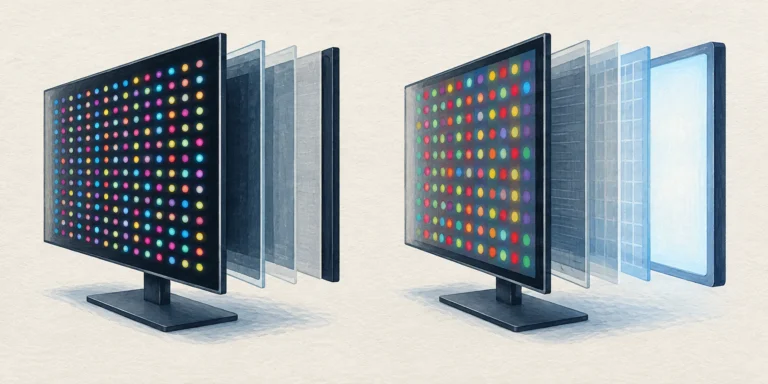
OLED pixels make their own light; conventional QLED TVs use a quantum-dot LCD panel with an LED backlight. QD-OLED and Mini LED explain why the labels need careful reading.
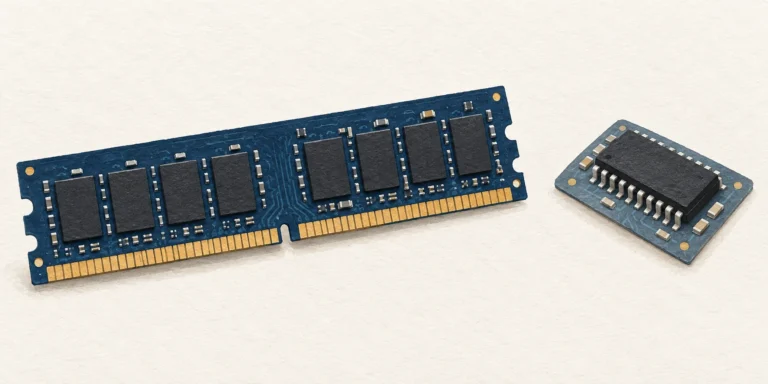
RAM is a computer’s writable working memory, usually losing its contents without power. ROM-family memory retains firmware or other data; some types can be deliberately reprogrammed.