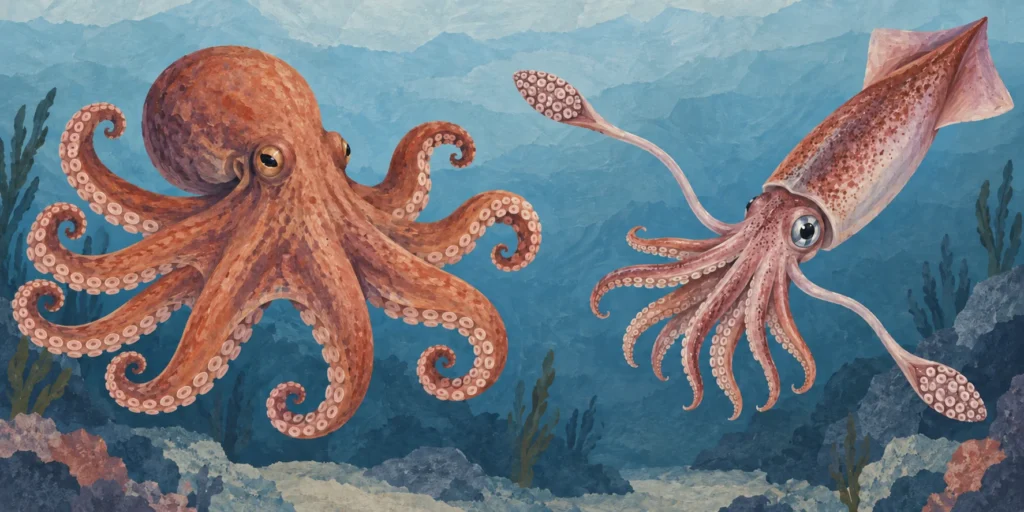
An octopus typically has eight arms; a squid usually has eight arms plus two feeding tentacles. The suckers, body outline and fins provide further clues.
An octopus typically has eight arms. A squid usually has eight arms plus two longer feeding tentacles, with suckers concentrated on enlarged clubs at their tips. The familiar long, finned squid outline is another clue, but fins and habitat are not universal dividing lines: some octopuses have fins, and some squid live close to the seabed. [1][2][3][4]
Both animals are cephalopod molluscs, not fish. This guide compares their usual body plans and then checks the exceptions that make an identification shortcut unreliable. [1]
Calling every appendage a “tentacle” hides the most useful distinction. In this comparison, an arm bears suckers along its length. A squid’s two specialised feeding tentacles instead have long shafts leading to expanded, sucker-bearing clubs. In many squid, the tentacles reach out to catch prey and the arms then hold it. [1]
The usual squid plan therefore totals ten appendages: eight arms + two tentacles. It does not mean ten identical arms. A photograph may hide the long pair behind the shorter arms or outside the frame, so counting only what is visible can be misleading.
An appendage check you can apply to a photograph
Find the head end: follow the appendages back to where they join the animal.
Look for an extra long pair: smooth shafts with expanded clubs support a typical squid identification.
Check the whole view: eight visible tips do not establish that only eight appendages exist.
Add context: use the mantle, fins and species information; do not decide from a single missing feature.
A British example and two useful exceptions
The common squid (Loligo vulgaris) is found around UK coasts. It has an elongated, cylindrical body, with two fins at the end opposite the head and arms. Its eight arms and two longer prey-catching tentacles give a concrete example of the usual squid arrangement. [4]
A fin is not proof of “squid”. The flapjack octopus has stubby fins and webbed arms, and can use both when swimming. Nor does “near the seabed” prove “octopus”: the bigfin squid is often observed hovering close to the bottom. These examples show why a typical outline or lifestyle must not become an absolute identification rule. [2][3]
A worked two-view observation
Imagine View A shows a cephalopod with eight appendage tips visible, while its head end is partly hidden. The defensible result is not enough evidence: a squid’s additional tentacles might be out of sight. Do not add invisible structures to a record, but do not treat a cropped photograph as a complete count either.
View B shows eight shorter sucker-bearing arms and two much longer appendages ending in clear clubs. That combination supports a typical squid identification. If the animal also has the slender body and rear fins of the common squid example, the observations agree; they still do not identify every squid to species. [1][4]
Test three shortcuts
1. I can count eight tips: must it be an octopus?
No. Eight visible tips are not necessarily a complete count. Look for the squid’s additional feeding pair and check whether the head and appendages are fully in view. [1][4]
2. It has fins: can I rule out octopus?
No. The flapjack octopus is a finned octopus. Fins help describe a body plan but cannot decide this comparison on their own. [2]
3. It is close to the seabed: must it be an octopus?
No. Bigfin squid are often seen near the bottom too. A place in the water column is supporting context, not a substitute for the animal’s structures. [3]
Frequently asked questions
Are squid and octopuses fish?
No. They are molluscs belonging to the cephalopod group, which also includes cuttlefish and nautiluses. [1]
Does soft-bodied mean there are no internal shell remnants?
No. A squid’s pen is a reduced internal shell. The octopus shell is much more reduced, so “soft-bodied” should not replace a careful description of each animal. [1]
Sources
Sources checked on 16 October 2026. The worked examples and exercises were written for this article.
AI tools assisted with drafting and the featured editorial illustration. The illustration is not a photograph, a measured diagram or evidence of an actual test.
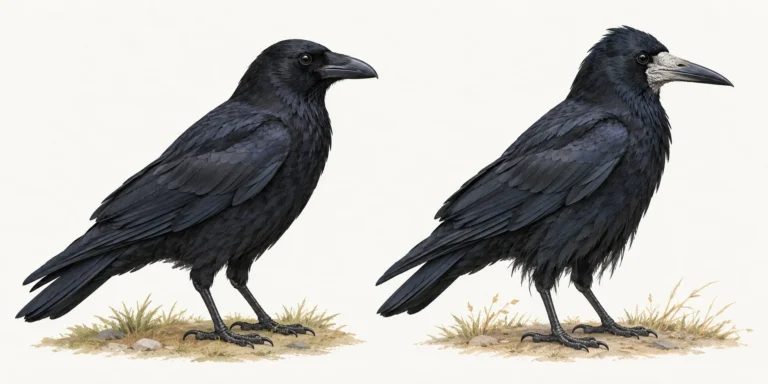
An adult rook has a pale bare patch around the base of its slimmer bill; a carrion crow has an all-black face and a heavier black bill. Young rooks and…
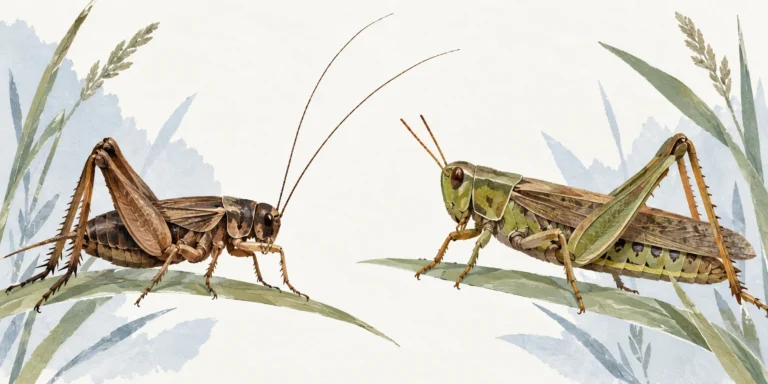
Crickets, including British bush-crickets, tend to have long antennae; grasshoppers have shorter antennae. Both jump, and colour alone is an unreliable guide.
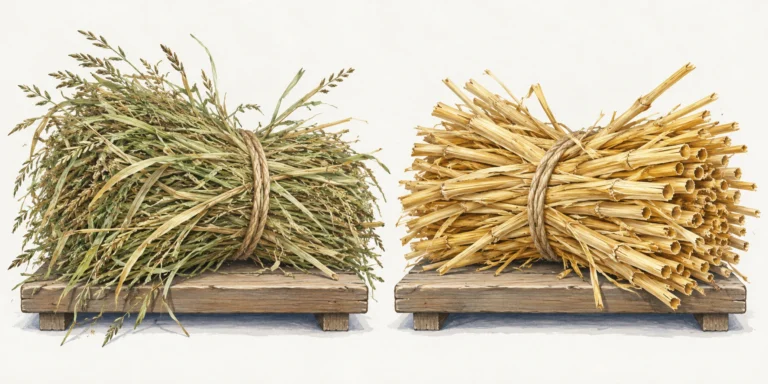
Hay is dried grass or other forage plants kept mainly as animal feed. Straw is the stalk material left from harvested cereals, often used for bedding, although it can also…