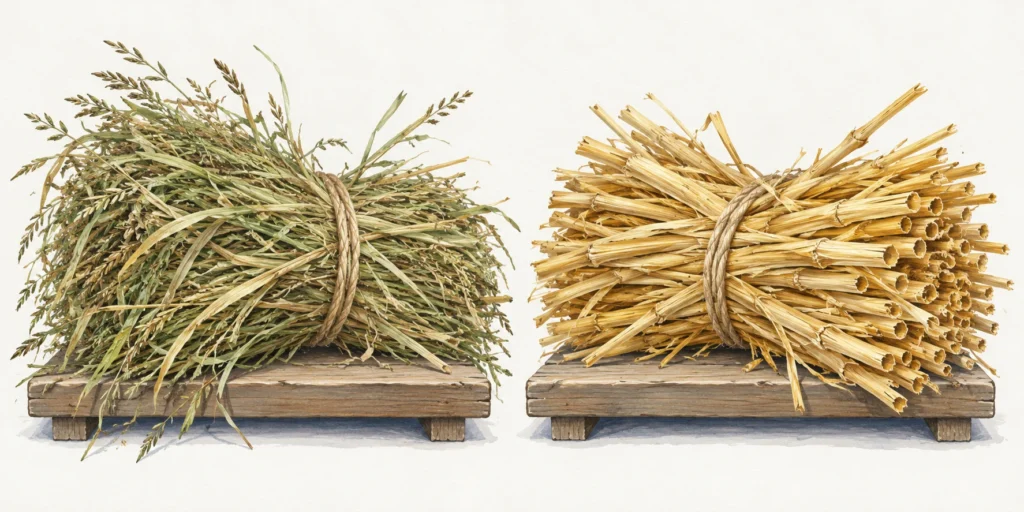
Hay is dried grass or other forage plants kept mainly as animal feed. Straw is the stalk material left from harvested cereals, often used for bedding, although it can also have feeding uses.
Hay is grass or other forage herbage cut and preserved by drying, mainly for animal feed. Straw is the dried stalk material from harvested cereal crops, commonly used for bedding. Their plant parts and usual purpose differ, but “hay is food, straw is never food” is too absolute: straw can also have a role in a properly planned diet. [1][2][3]
Generally lower nutritional value in the horse-care comparison. [3]
Shared limitation
The name alone does not establish a suitable individual ration. [1]
The name alone does not establish suitable feed or bedding quality. [2][3]
Think about the plant, then the purpose
The useful starting point is what was harvested. A hay crop preserves cut forage plants. Straw comes from the stalks of a cereal harvest. Calling both “dried grass” misses the agricultural distinction between preserving herbage as a feed crop and retaining cereal stalk material. [1]
This is why a request for hay and a request for straw are different orders, even when both arrive tied into bales. A bale is a way of handling material, not the material’s identity. Ask what the bale contains and what it was supplied for before using the terms interchangeably.
Feed and bedding are typical roles, not absolute rules
Straw is used for livestock bedding, where the material helps form and maintain a bedding layer. Feed and bedding management are distinct tasks; a guide for one cannot be assumed to establish suitability for the other. [2]
Some straw can also be used in managed horse diets. Its lower nutritional value is one reason that such use requires a considered plan rather than a casual swap. A bedding bale is not automatically an approved feed supply, and replacing an animal’s forage is a different decision from learning the names. [3]
Hay also varies. Plant type and the stage at which a forage crop is cut affect its nutritional properties. The word hay does not supply a nutrient analysis, and a photograph cannot establish a diet for a particular animal. [1]
A worked bale-order example
Suppose a supplier offers hay in two hypothetical bale sizes: 20 kg and 10 kg. Two of the 20 kg bales contain 40 kg; four of the 10 kg bales also contain 40 kg. “Two bales” and “four bales” can therefore represent the same mass.
Now suppose another offer is two 20 kg straw bales. That is also 40 kg, but it is a different material. Equal mass does not make the contents nutritionally equivalent or suitable for the same purpose. For an order, record material, intended use, bale mass and number. These invented figures teach the ordering check; they are not feeding quantities.
Four checks before comparing bales
Material: hay or cereal straw?
Purpose: feed supply or bedding?
Quantity: actual mass per bale and total mass?
Suitability: confirmed quality and the needs of the intended animal or task?
Resolve the purpose before comparing quantities. [1][2][3]
Test the common shortcuts
Two bales look alike. Does that make hay and straw interchangeable?
No. Bale shape does not change their different plant origins or establish the intended use. Confirm the contents and purpose. [1][2]
Is straw never used as feed?
No. It can have a role in a managed diet. That does not make any straw bale a complete substitute for an animal’s usual forage. [3]
Which is more material: two 20 kg bales or four 10 kg bales?
Neither: both total 40 kg. You still need to know what the material is and whether it suits the task. This is a hypothetical mass calculation, not a ration.
Frequently asked questions
Is haylage just another word for hay?
No. Haylage is preserved airtight while less fully dried; dry hay is preserved by drying. Do not treat the two names as identical products. [1]
Sources
Source pages checked on 23 October 2026. The examples and self-checks were written for this article with AI assistance and checked against the listed material.
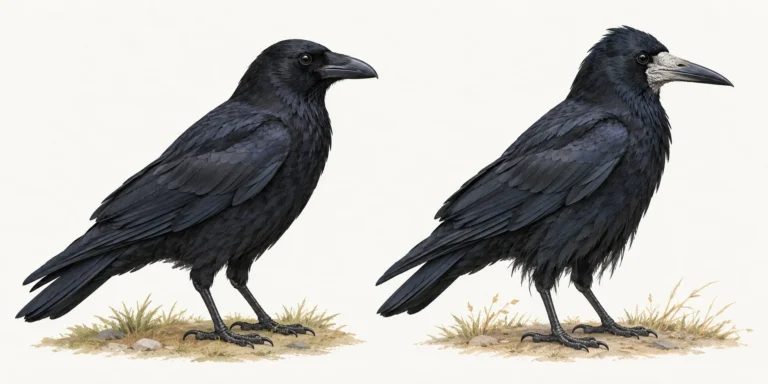
An adult rook has a pale bare patch around the base of its slimmer bill; a carrion crow has an all-black face and a heavier black bill. Young rooks and…
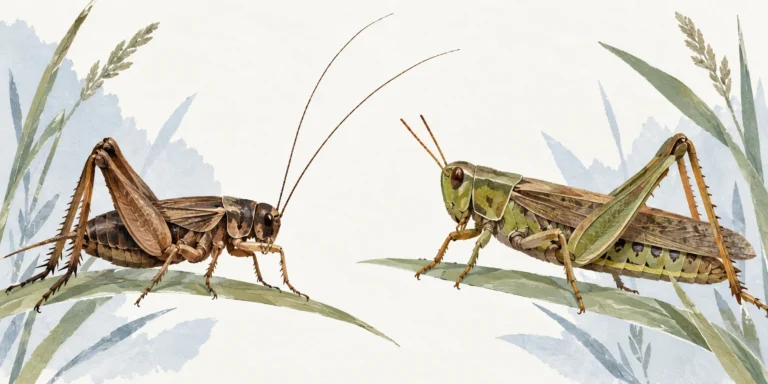
Crickets, including British bush-crickets, tend to have long antennae; grasshoppers have shorter antennae. Both jump, and colour alone is an unreliable guide.
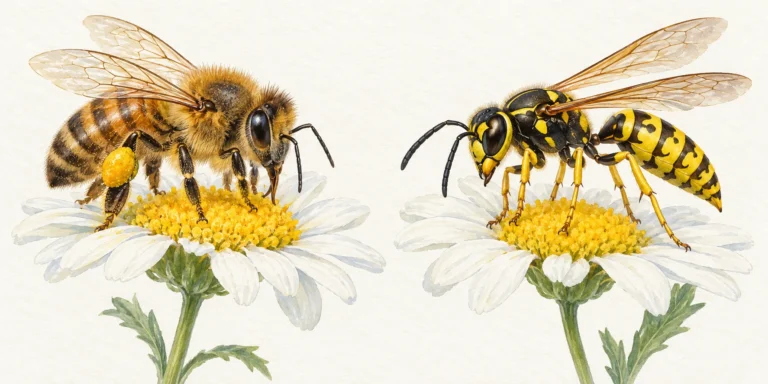
Familiar bees are usually hairier and collect pollen for their young; common social wasps are sleeker and feed their larvae mainly on other insects. Colour alone is not enough.