A boat usually suggests a smaller watercraft and a ship a larger seagoing vessel. Usage overlaps: ferries may be called boats and submarines retain boat terminology.
In ordinary British English, a boat usually means a smaller watercraft, while a ship usually means a larger vessel, especially one travelling at sea. The words overlap: boat can informally mean ship, and submarine terminology shows why size alone cannot decide every case. [1][2][3]
This is a guide to the words as people use them, not a classification for registration, insurance or navigation. When an exact vessel category matters, its named type and the relevant context tell you more than the everyday boat-or-ship label.
Typical scale does not create a universal word boundary [1][2][3]
Size is useful, but not a complete definition
A rowing boat beside a merchant ship makes the usual contrast easy to see. That representative picture is useful for learning the words. It becomes misleading if turned into “everything above this length is a ship” without saying whose definition is being used. [1][2]
A specific technical scheme may define categories for its own purpose. That does not automatically decide ordinary conversation. Likewise, counting decks or noticing whether a vessel carries a smaller craft cannot replace the context with one rule that works for every use.
A route to the more precise word
Ordinary description? Use boat for the familiar smaller craft and ship for the familiar larger one.
An established type or name? Keep it: rowing boat, passenger ferry, merchant ship or submarine.
A formal classification? Read the definition in that specific document.
Why a large submarine can be a boat
The Astute class provides a concrete British counterexample to a size-only rule. Its submarines are described using boat terminology, and their stated length is 97 metres. That is far beyond what most people picture when hearing “small boat”. The word reflects established usage as well as dimensions. [3]
The lesson is about language, not a different measurement of the hull. Calling such a submarine a boat does not make it short. Equally, using ship for an ordinary large merchant vessel does not prove that every other vessel must follow the same naming convention.
Two worked wording decisions
Imagine a message saying, “We are taking the boat to the island.” If the crossing is on a large passenger ferry, the casual sentence can still work: boat has that broader informal use. For a report about the service, passenger ferry is more informative than arguing that the casual word must be wrong. [1]
Now suppose someone proposes a rule that every vessel longer than 25 metres must always be called a ship. The 97-metre Astute-class example defeats that proposed universal rule. It does not prove the opposite rule; it shows why one dimension cannot explain every convention. [3]
Test three definitions
1. A small craft is propelled by oars: which ordinary word fits?
Boat. Rowing boat is a standard everyday example. [1]
2. Someone says “boat” when discussing a large ferry: necessarily wrong?
No. Boat can informally mean a ship. Use ferry when the service type needs to be explicit. [1]
3. Does a 97-metre submarine disprove a universal small-boat rule?
Yes. Astute-class boat terminology is a real counterexample. It does not supply a new length boundary. [3]
Frequently asked questions
Is vessel a useful alternative?
It is a useful general word when you do not need to choose between boat and ship. Add the type where it helps the reader: a rowing vessel is less natural than rowing boat.
Can a ship also use sails?
Yes. Sailing ship is an established expression, just as sailing boat is. Propulsion by sail alone does not settle the distinction. [1][2]
Sources
Sources checked on 13 October 2026. Worked examples and exercises were written for this article.
AI tools assisted with drafting and the featured editorial illustration. The illustration is an explanatory representation, not a photograph, measurement or test result. Claims were checked against the linked sources; no independent human expert review is claimed.
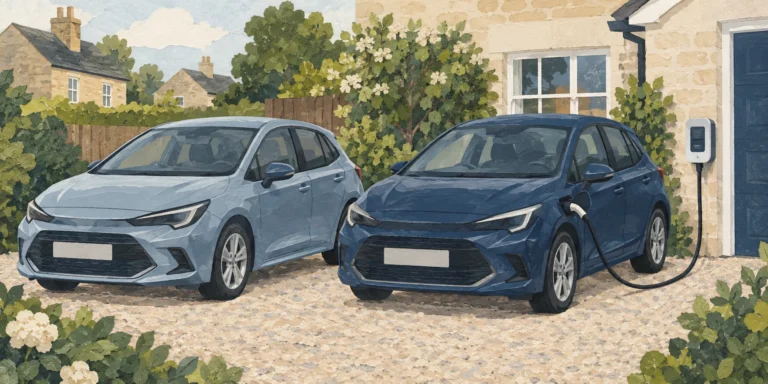
A full hybrid charges its battery while driving; a plug-in hybrid can also charge from an external supply and usually offers more electric-only driving.
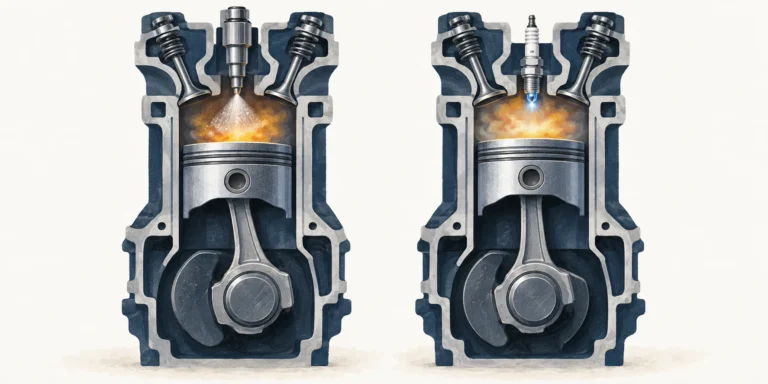
Diesel engines ignite fuel through compression heat; petrol engines usually use spark plugs. Journey pattern, emissions equipment and actual costs change the comparison.
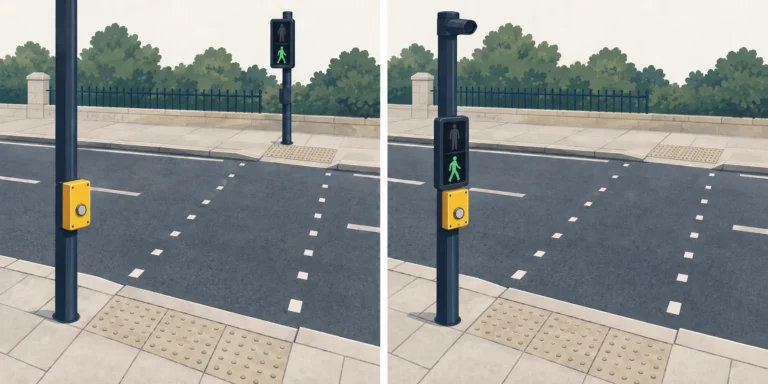
Pelican crossings have far-side pedestrian signals and a flashing phase. Puffin signals are beside you, with sensors and no flashing amber for drivers.