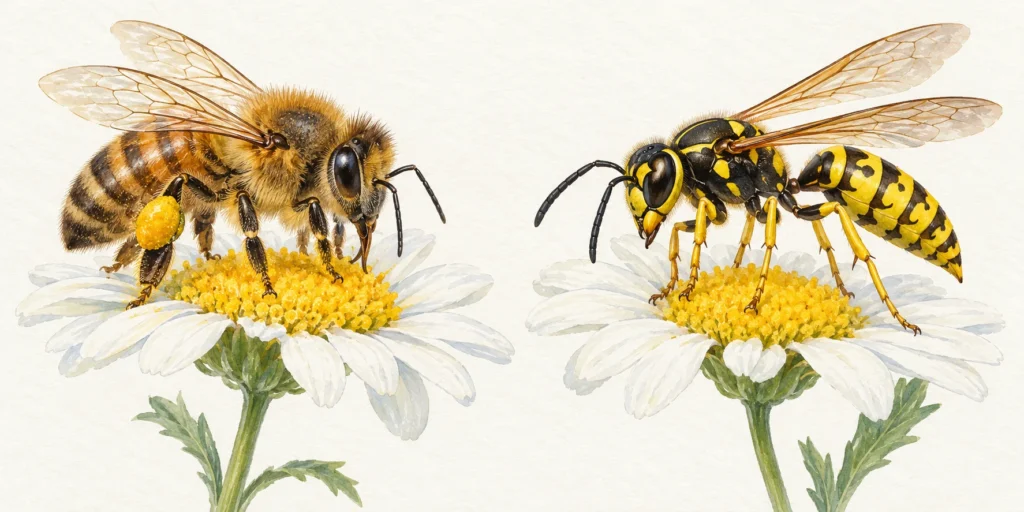
Familiar bees are usually hairier and collect pollen for their young; common social wasps are sleeker and feed their larvae mainly on other insects. Colour alone is not enough.
Familiar bees are usually hairier and gather pollen and nectar to feed their young. Common social wasps are generally sleeker, with a more obvious narrow waist, and feed their larvae mainly on other insects. Both groups can visit flowers, so yellow-and-black stripes or flower-visiting alone do not settle the identification. [1][2][3][4]
Britain has honeybees, bumblebees and many solitary bees, as well as numerous kinds of wasp. The contrasts below concern familiar garden bees and common social wasps, especially the common wasp, rather than every species in either group. [1][2][3]
Useful cues for familiar British garden visitors
Feature
Bees
Common social wasps
Typical appearance
Honeybees and especially bumblebees are relatively hairy. [2][4]
Usually smoother and more slender, with a noticeable waist. [2][3]
Food collected for young
Pollen and nectar are central to the familiar bee examples. [1]
Workers bring other insects to feed the larvae. [2][3]
Pollen transport
Female foragers may carry conspicuous loads on legs or beneath the abdomen. [4]
Common wasps lack those specialised pollen-carrying baskets or brushes. [4]
Adults can visit flowers for sugary food and contribute to pollination. [3]
Nest example
Honeybees use wax comb; other bee nesting arrangements differ. [1][4]
Common wasps build papery nests using chewed wood. [3]
Colony life
Honeybee colonies persist over winter; most social bumblebee colonies are seasonal. [1]
Seasonal colonies end, with young queens overwintering separately. [2]
Food for larvae explains more than stripes
A honeybee carrying pollen is gathering a resource used to feed the colony’s young. A common wasp carrying an insect can be doing the corresponding provisioning job with different food. That is a more useful biological contrast than “bees like flowers and wasps do not”. [1][2][3]
Adult wasps also need energy and may feed on nectar, ripe fruit and other sugary foods. Their visits to flowers and their capture of other insects are both parts of their ecology. Calling every wasp a useless version of a bee misses those roles. [2][3]
A practical observation example
Suppose a yellow-and-black insect lands on a garden flower. That observation is still ambiguous: bees, wasps and some flies can have similar colouring. Look for several visible features rather than turning one stripe pattern into a confident species name. [2][4]
A hairy body together with a clear load of collected pollen supports a bee interpretation. A relatively sleek, narrow-waisted visitor may fit a common social wasp. But absence of a visible pollen load does not rule out a bee, and some bees look wasp-like. If the photograph lacks the necessary detail, “unidentified bee or wasp” is a better record than an invented species identification. [2][3][4]
Build an identification from several clues
Start broad: stripes and a flower visit are not enough.
Add visible evidence: body hair, waist, antennae and any collected pollen.
Keep uncertainty: compare a clear photograph with an appropriate identification guide before naming a species.
The illustration shows a representative honeybee and social wasp, not every species or an exact size comparison. [2][3][4]
Bee colonies do not all have one lifecycle
Honeybee colonies can continue through winter, living on stored honey. Most social bumblebee colonies have a seasonal cycle instead: the old colony declines, while new queens carry the next generation forward. Some bumblebees in warmer places can have active winter nests, so even that pattern has limits. [1]
Familiar social wasp colonies also have a seasonal cycle, with new queens surviving separately after the old colony ends. That makes “bees live through winter, wasps do not” a poor general rule. The comparison needs to name honeybees, bumblebees or the particular wasp group. [1][2]
Check the common shortcuts
Does a yellow-and-black body prove an insect is a wasp?
No. Some bees share those colours, some bees resemble wasps, and hoverflies can mimic both groups. Colour is only one clue. [2][4]
Is an insect visiting a flower necessarily a bee?
No. Common wasps also visit flowers and can contribute to pollination. A flower visit does not establish the group by itself. [1][3]
Do all bee colonies survive winter like a honeybee hive?
No. Most social bumblebee colonies are seasonal, unlike the familiar perennial honeybee colony. There are exceptions to the usual bumblebee pattern in warmer areas. [1]
Frequently asked questions
Can the striped insect actually be a fly?
Yes. Some hoverflies resemble bees or wasps. Flies have one pair of wings, while bees have two pairs, though overlap and photograph angle can make counting difficult. Do not claim a firm identification from an unclear view. [4]
Sources
Source pages checked on 22 October 2026. The examples and self-checks were written for this article with AI assistance and checked against the listed material.
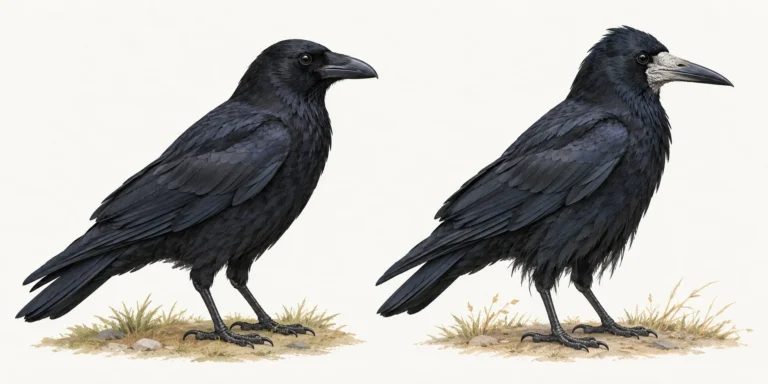
An adult rook has a pale bare patch around the base of its slimmer bill; a carrion crow has an all-black face and a heavier black bill. Young rooks and…
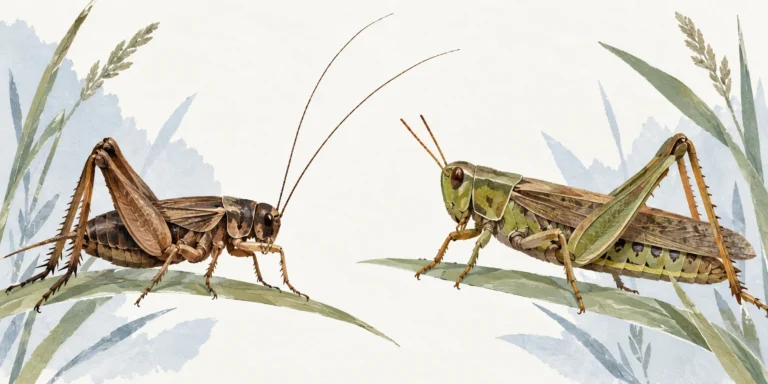
Crickets, including British bush-crickets, tend to have long antennae; grasshoppers have shorter antennae. Both jump, and colour alone is an unreliable guide.
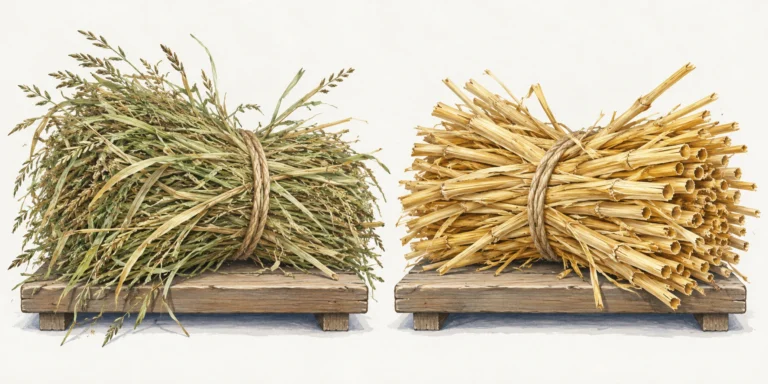
Hay is dried grass or other forage plants kept mainly as animal feed. Straw is the stalk material left from harvested cereals, often used for bedding, although it can also…