Bison and true buffalo are different animals, but buffalo is also a familiar North American name for the American bison. Shape and context resolve the confusion.
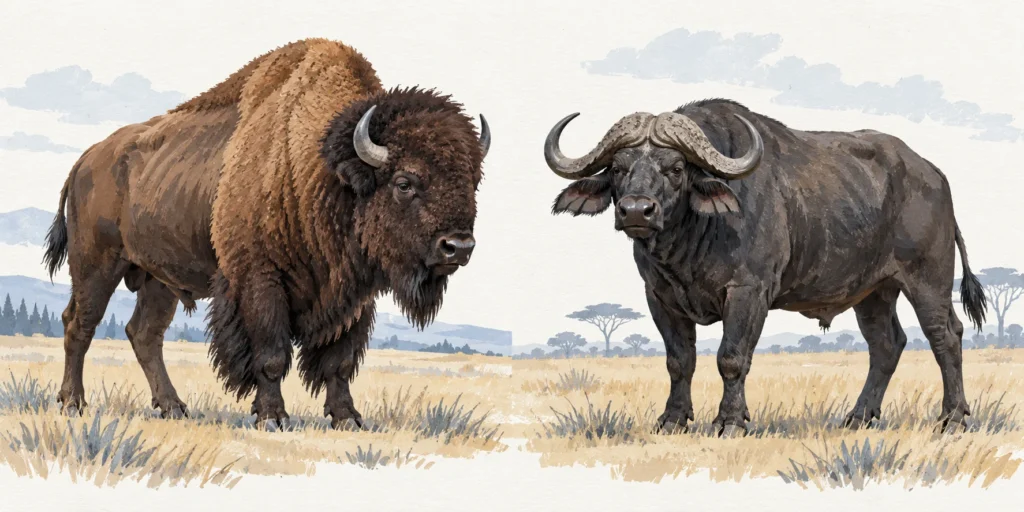
Bison and African or Asian buffalo are different animals. An adult American bison has a conspicuous shoulder hump, shaggy forequarters and a beard; true buffalo have a different outline and horn shape. But in North America, buffalo is also an established common name for the American bison. The word can therefore describe the same animal or a different one, depending on context. [1][2][3]
Here the main visual comparison is the American bison with African buffalo and Asian water buffalo. “Bison live in America” is not the complete story: the European bison, also called the wisent, is another bison. [2]
Bison and buffalo compared
Names, adult appearance and the limits of each clue
Feature
American bison
African or Asian buffalo
Precise identity
American bison: Bison bison
African buffalo: Syncerus caffer; wild Asian water buffalo: Bubalus arnee[1][3]
Shoulder and coat
Prominent high shoulder hump; thick, shaggy forequarters
Less shaggy coat; lacks the American bison’s pronounced shoulder profile [1][3]
Horns
Relatively short horns curving upwards
Different buffalo horn forms; adult Cape buffalo bulls have a broad joined base across the head [1][2][3]
Geographic context
Native to North America
African buffalo is African; wild Asian water buffalo is Asian [3]
The word buffalo
Commonly applied to this species in North America
Also names genuinely different animals elsewhere [1][2]
Shared family
A member of Bovidae
Also members of Bovidae; shared family is not shared species [2]
Why American buffalo is a real common name
An American wildlife caption using “buffalo” is not necessarily misidentifying an African animal. It may simply use the familiar local name for a bison. For a precise species label, American bison removes the ambiguity. It does not mean that buffalo are female bison, young bison or a separate breed of bison. [1][2]
That distinction is useful when reading a travel article or labelling a photograph. First establish which animal the writer means; then choose a name that makes the setting clear. Correcting a common name without checking its context can introduce confusion rather than remove it.
Two questions that separate naming from identification
What does the word mean here? In a North American setting, buffalo may mean American bison.
Which animal is pictured? Compare the full adult outline, coat and horns. A name on its own cannot show these features.
What should the caption say? Use the specific animal name when a broad common name would be ambiguous.
A worked photo-caption example
Imagine two photographs being prepared for a school display. Photo A was taken in a North American park and shows a dark, shaggy animal with a high shoulder hump and short upturned horns. American bison is a precise caption; a local description calling it “buffalo” can still refer to that animal. [1]
Photo B shows a smoother-coated animal with broad horns joining across the top of its head, labelled as an adult Cape buffalo. It should keep the specific Cape buffalo name, rather than borrowing the bison caption because both are large horned mammals. [2][3]
If the only information is “buffalo at a zoo”, leave the species unresolved until you have the animal’s label or a useful view. The zoo’s country is not the same thing as the animal’s native range.
Check three tempting shortcuts
1. A Yellowstone caption says buffalo: must it be wrong?
No. Buffalo is an established common name for American bison in North America. A precise caption can say American bison without treating the original term as a different species. [1]
2. Is a buffalo a female bison?
No. That is a naming mix-up, not a male–female distinction. African and Asian buffalo are different animals; North American buffalo may simply mean American bison. [1][2][3]
3. Does a European setting rule out bison?
No. European bison, or wisent, exist too. Check the actual animal rather than turning the American bison’s native range into a rule for every bison. [2]
Frequently asked questions
Are bison and buffalo related?
Yes, they belong to the cattle family, Bovidae. That broader relationship does not make an American bison and an African buffalo the same species. [2][3]
Does the illustration show every kind of buffalo?
No. It pairs an American bison with an adult African Cape buffalo. Asian water buffalo are another comparison; the picture is a representative editorial illustration, not an exhaustive identification chart.
Sources
Sources checked on 15 October 2026. The worked examples and exercises were written for this article.
Bison Ecology — National Park Service, Yellowstone National Park.
AI tools assisted with drafting and the featured editorial illustration. The illustration is not a photograph, a measured scientific diagram or evidence of a product test.
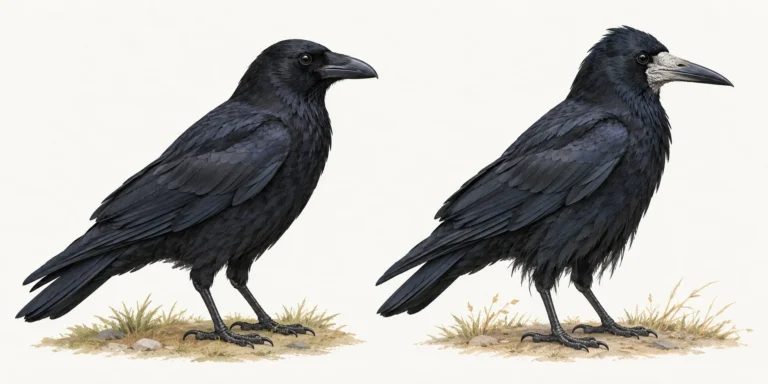
An adult rook has a pale bare patch around the base of its slimmer bill; a carrion crow has an all-black face and a heavier black bill. Young rooks and…
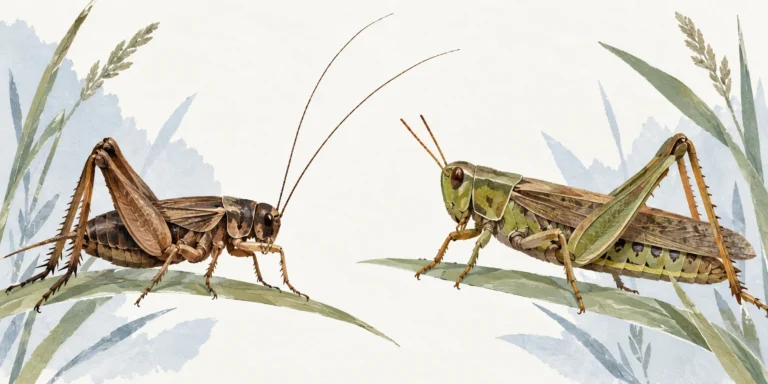
Crickets, including British bush-crickets, tend to have long antennae; grasshoppers have shorter antennae. Both jump, and colour alone is an unreliable guide.
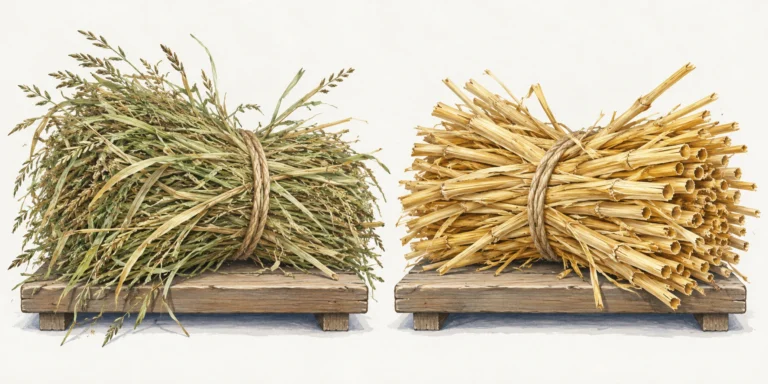
Hay is dried grass or other forage plants kept mainly as animal feed. Straw is the stalk material left from harvested cereals, often used for bedding, although it can also…