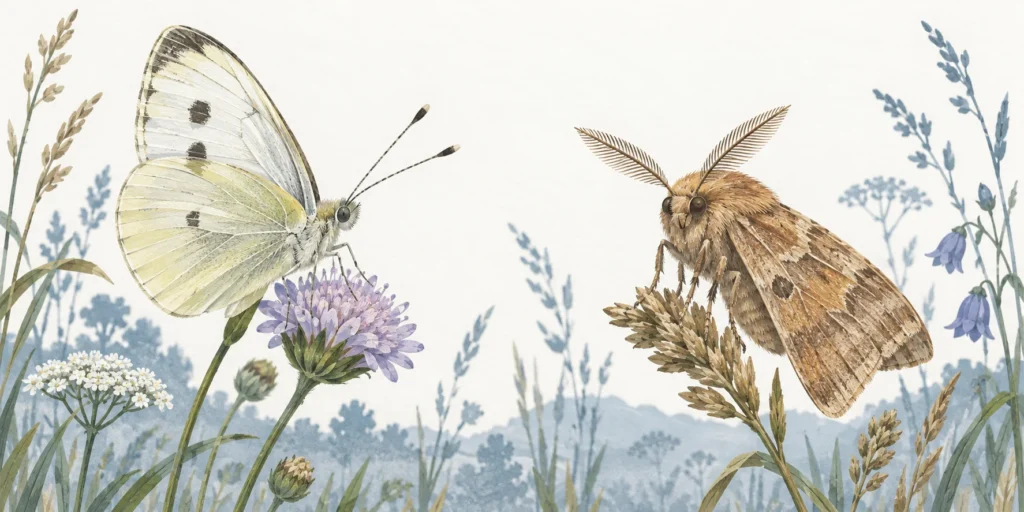
Butterflies usually have club-tipped antennae, while moth antennae are more varied and often thread-like or feathery. Many butterflies rest with upright wings and many moths with wings spread or folded over the body, but neither posture nor colour nor time of day is a foolproof test. [1][2]
Both belong to Lepidoptera, the insect order with scaled wings. This is a comparison of related insects, not of two unrelated kinds of animal. The everyday names are useful, but they do not produce a simple checklist that works for every species worldwide. [2][3]
Butterfly and moth compared
Useful clues and the exceptions that matter
Clue
Butterfly
Moth
Antennae
Usually a thickened club at the tip
Often tapering or feathery; some are clubbed [1][2]
Wings at rest
Often held upright together
Often spread or folded over the body; upright exceptions exist [1][2]
Activity
Usually noticed during daylight
Many active at night, but many also fly by day [1][2]
Look at the antennae on the head rather than confusing them with the legs. British butterflies do not have feathery antennae. However, a thickened tip does not settle the question: the antennae of a Dingy Skipper butterfly and a Six-spot Burnet moth can look surprisingly similar. [1]
Wing position helps when you can see the whole insect, but a resting moth may hold its wings upright. Some butterflies and skippers hold them flatter. A photograph taken from above can hide both the antenna tips and how the wings sit, so the angle matters. [2]
A three-stage observation route
Look closely: can you see both antenna tips and the resting wings?
Combine evidence: note shape and pattern as well as posture and activity.
Keep uncertainty: if the important features are hidden, record butterfly or moth as unresolved.
A worked garden example
Imagine a red-and-dark insect feeding on a flower at lunchtime. A friend calls it a butterfly because it is colourful and flying in daylight. That conclusion goes beyond the evidence: day-flying, brightly coloured moths exist too. [1][2]
Your useful next step is a clearer head-and-wing photograph, not another guess from the colour. If the new view shows feathery antennae, that supports a moth in this British comparison. If it shows clubs, you still compare the complete pattern and shape with a species guide. The first answer is now supported; the second remains a clue requiring more detail.
Test three tempting shortcuts
1. A bright insect flies at noon: must it be a butterfly?
No. Daytime activity and bright colours also occur in moths. Add structural clues before deciding. [1][2]
2. Does a thickened antenna tip prove butterfly?
No. Clubbed antennae are common in butterflies, but some moths have similar tips. The British burnet example shows the limit. [1][2]
3. Does an upright resting wing position rule out moth?
No. Some moths rest with upright wings. Posture belongs in a combined assessment, not as a deciding rule on its own. [1][2]
Frequently asked questions
Are skippers butterflies?
Skippers are included with butterflies in this comparison. Their shapes and postures help explain why a typical delicate butterfly silhouette cannot define every butterfly. [2]
Is a moth just a butterfly that comes out at night?
No. The names refer to groups of related insects; activity time alone does not assign an individual to one of them. [1][2]
Sources
Sources checked on 13 October 2026. Worked examples and exercises were written for this article.
AI tools assisted with drafting and the featured editorial illustration. The illustration is an explanatory representation, not a photograph, measurement or test result. Claims were checked against the linked sources; no independent human expert review is claimed.
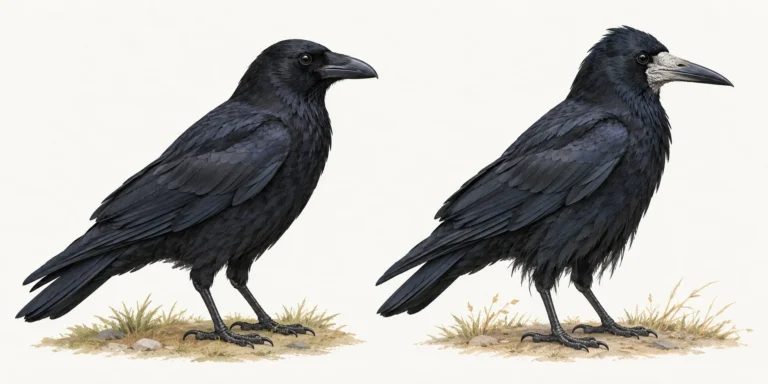
An adult rook has a pale bare patch around the base of its slimmer bill; a carrion crow has an all-black face and a heavier black bill. Young rooks and…
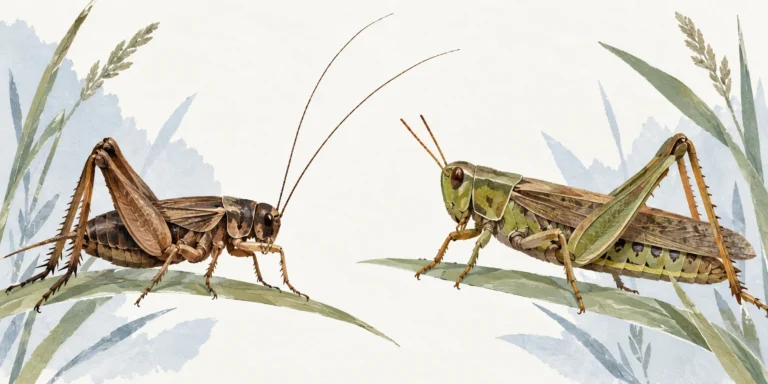
Crickets, including British bush-crickets, tend to have long antennae; grasshoppers have shorter antennae. Both jump, and colour alone is an unreliable guide.
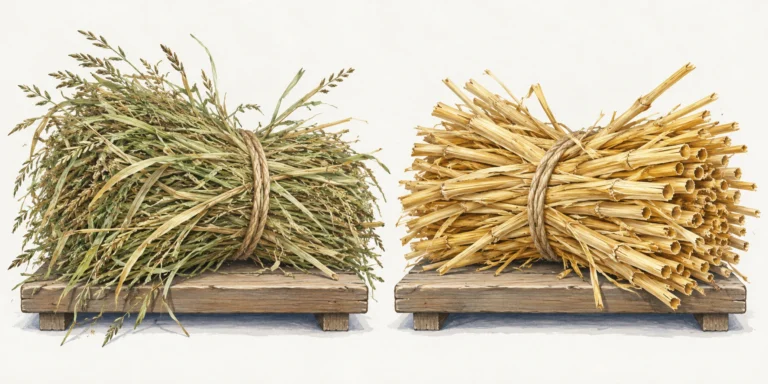
Hay is dried grass or other forage plants kept mainly as animal feed. Straw is the stalk material left from harvested cereals, often used for bedding, although it can also…