Double cream vs single cream: what’s the difference?
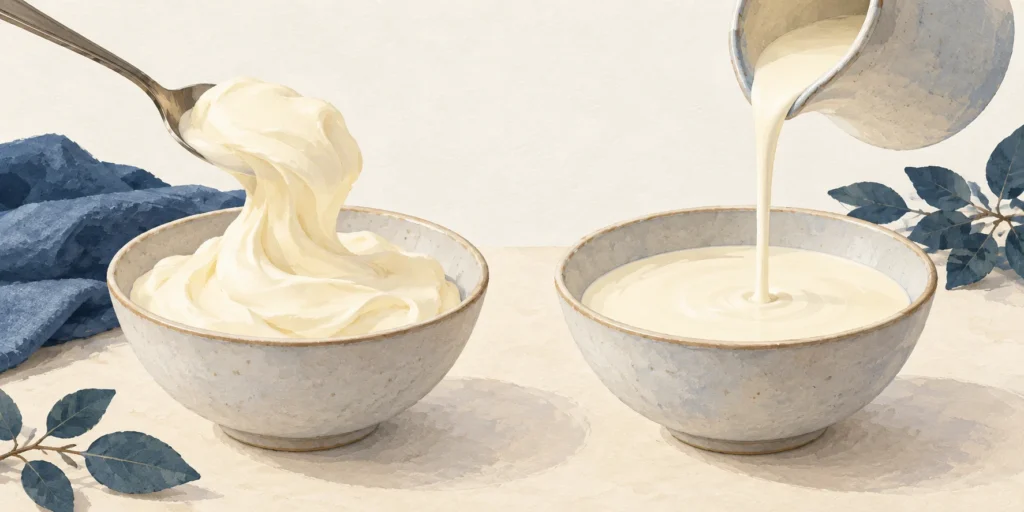
British double cream is typically around 48% fat and can be whipped; single cream is around 18% and is used for pouring or enriching dishes. They are not interchangeable in every recipe.
In British cooking, double cream is typically around 48% milk fat: it is richer, thicker and suitable for whipping. Single cream is typically around 18% fat and suits pouring or enriching dishes, but will not whip into a cake filling. Both are dairy cream; the recipe’s job determines whether a swap will work. [1][2][3]
May make a pouring dish richer than intended. [2][3]
Cannot replace whipping-suitable cream where the recipe needs whipped structure. [1][3]
The job matters more than the pot size
Pouring cream over fruit and making a filling that holds its shape are different jobs. In the first, a flowing texture may be exactly what you want. In the second, the ability to hold air after whipping is part of the recipe, rather than an optional finishing touch. [1][2][3]
Imagine you have a single-cream pot and two planned desserts: fruit with cream today, and a cake with a whipped filling tomorrow. The pot suits the first task. It does not become suitable for the second just because you whisk it for longer. Change to a recipe designed for that ingredient or obtain a whipping-suitable cream. [1][3]
Choose by what the cream must do
Pour: single or double can work; choose the texture the dish needs.
Hold whipped structure: use a cream explicitly suitable for whipping.
Cook into a dish: follow that recipe’s cream type and heat instructions.
These are ingredient checks, not a universal method for every sauce. [1][2][3]
“Double” does not mean twice the fat
Using the representative 48% and 18% values, the gap is 30 percentage points. Dividing 48 by 18 gives about 2.67, so the word double is a name, not a promise of exactly twice the fat. The percentages describe composition by mass. [1][2]
For a worked example, suppose you weigh 20 g of each cream. At 48% fat, 20 g×0.48 gives 9.6 g of fat. At 18%, 20 g×0.18 gives 3.6 g. The difference is 6 g. This is arithmetic using stated fat percentages, not a measured serving, calorie calculation or recommendation about how much to eat.
Why a sauce or filling can change after a swap
Replacing double cream with single reduces both richness and whipping capability. Single cream can be useful in savoury dishes, but it is less tolerant of boiling. A recipe that works with double cream should not be assumed to behave identically after that substitution. [1][2][3]
Going the other way can change the intended texture too: a thin pouring accompaniment may become noticeably richer. Check whether the recipe needs a liquid addition, a reduced sauce or a whipped topping before treating the two pots as substitutes. [2][3]
Try the recipe checks
The recipe needs whipped peaks. Can single cream replace double cream?
No. Single cream is not suitable for whipping. The recipe needs a cream that can perform that structural job. [1][2][3]
Does a 48% label mean exactly twice an 18% label?
No. 48÷18≈2.67. For the same 20 g mass, the example gives 9.6 g versus 3.6 g fat, not a two-to-one ratio. [1][2]
Can both be poured over a dessert?
Yes. Pouring is a shared use, although double cream gives a thicker, richer result. That does not mean both can also be whipped. [1][2][3]
Frequently asked questions
Is double cream already whipped?
No. Suitable for whipping describes what you can do with it. Ordinary double cream, whipped cream and extra-thick double cream are not simply three names for the same preparation. [2][3]
Sources
Source pages checked on 23 October 2026. The examples and self-checks were written for this article with AI assistance and checked against the listed material.
Baking soda and bicarbonate of soda are two names for the same cooking ingredient: sodium bicarbonate. Baking powder is a different mixture, so that is not the same name-only swap.
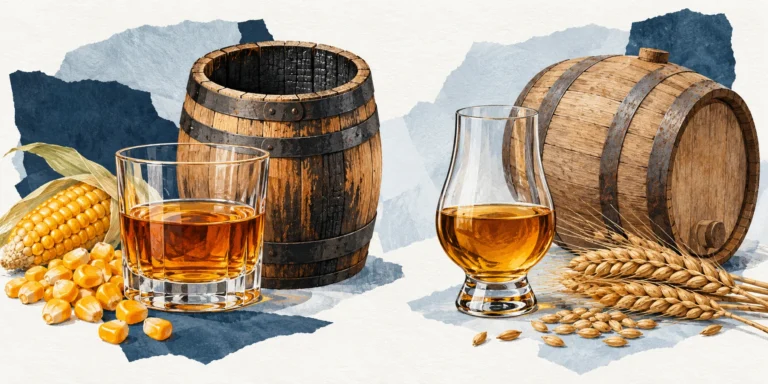
Bourbon is a type of American whiskey, made with at least 51% corn and stored in new charred oak. Whiskey is the wider family, whose named styles follow different rules.
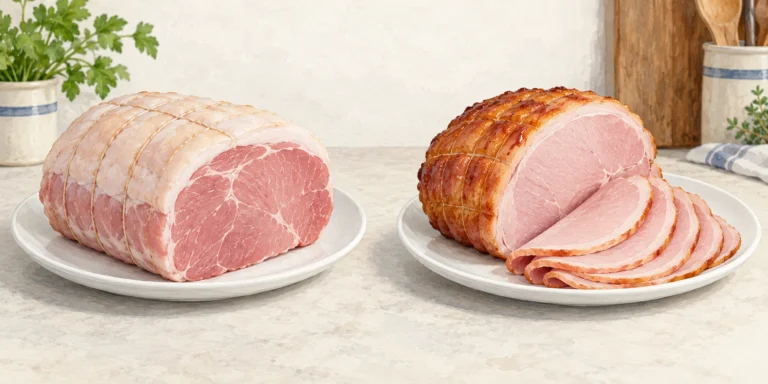
In ordinary British shop use, gammon is cured pork sold uncooked; ham is sold ready to eat. Not every ready-to-eat ham is cooked, so read the actual label.