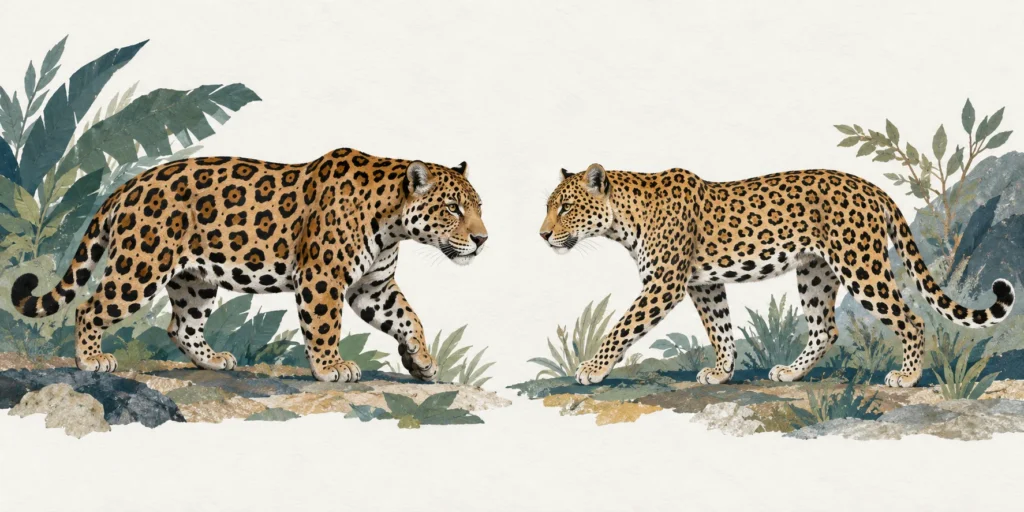
Jaguars are usually stockier, with larger rosettes that often contain central spots. Leopards are more slender. Their wild ranges also provide a useful clue.
A jaguar is typically stockier than a leopard, with larger rosettes that often have spots inside them. A leopard usually has a more slender outline and smaller rosettes without central spots. In the wild, jaguars live in the Americas; leopards live in Africa and Asia. [1][2][3]
Both are spotted big cats, but they are different species: jaguar (Panthera onca) and leopard (Panthera pardus). For identification, combine the coat pattern, overall build and reliable information about where the animal was seen. [1][2][3]
Jaguar and leopard compared
Clues that help separate the two cats
Feature
Jaguar
Leopard
Rosettes
Generally larger; often contain one or more central spots
Generally smaller; usually no central spots [1][2][3]
A rosette is a dark, roughly ring-shaped marking around a lighter centre. On a jaguar, that centre often contains another dark spot. On a leopard, it is usually clear. The distinction is easiest to judge across a well-lit patch of the animal’s side. [1][2]
One cropped marking is weak evidence: a border may be hidden, and not every jaguar rosette has an obvious central dot. A photograph showing the torso and several clear markings gives you much more to work with. Body proportions provide a second clue, although perspective can make a slender animal look broad.
A practical identification sequence
Pattern: examine several clear rosettes for central spots.
Proportions: compare the whole animal’s build.
Context: use a verified wild location to check the answer.
If the clues conflict or the image hides them, leave the identification uncertain. [1][2][3]
A worked camera-trap example
Suppose a clearly labelled camera-trap photograph was taken in the wild in Costa Rica. It shows a stocky cat and several large rosettes with dark spots inside them. The pattern and proportions favour jaguar, and the American location supports that identification. This is a worked example, not a report of a field test. [1][3]
Now imagine the same picture was taken at a zoo in Britain. Britain tells you where the enclosure is, not the species’ natural range. You would need the animal’s features or its identification sign; the location shortcut no longer works.
What a black coat and behaviour can tell you
“Black panther” can refer to a melanistic jaguar or leopard. Dark fur can hide markings that become clearer in suitable light, so black colour alone cannot decide between them. [1][2][3]
Nor does a cat in water automatically become a jaguar: leopards can swim too. Both can also climb. Those shared abilities are useful context, but they are poor substitutes for the coat and build clues. [1][2]
Try three identification decisions
1. A wild American cat with large, internally spotted rosettes?
Jaguar is the supported answer. The markings and verified location agree. Still check the full image rather than one isolated spot. [1][3]
2. A slender wild African cat with smaller, hollow rosettes?
Leopard is the better match. Both pattern and location support it. [2][3]
3. A black cat swimming in a British zoo?
There is not enough information. Both species can be dark-coated and both can swim. The zoo’s location does not identify the wild range. [1][2]
Frequently asked questions
Is a black panther a third species?
Not in this comparison. The name can describe a dark-coated jaguar or leopard; use the actual species name when precision matters. [1][2][3]
Are jaguars and leopards interchangeable names?
No. They name different species. Similar-looking rosettes explain the confusion, but the combination of pattern, proportions and wild range separates them. [1][2][3]
Sources
Sources checked on 11 October 2026. Worked examples and exercises were written for this article.
AI tools assisted with drafting and the featured editorial illustration. The illustration is not a photograph, measurement or test result. Claims were checked against the linked sources; no independent human expert review is claimed.
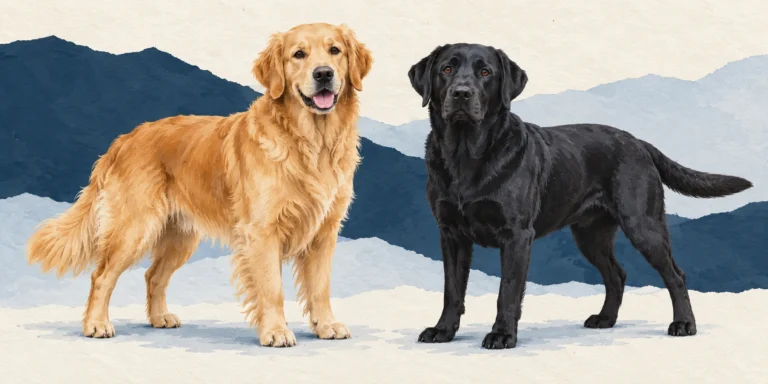
A Golden Retriever has a feathered, flat or wavy coat; a Labrador has a short dense coat and thick unfeathered tail. Both are active retrievers, with overlapping sizes and individual…
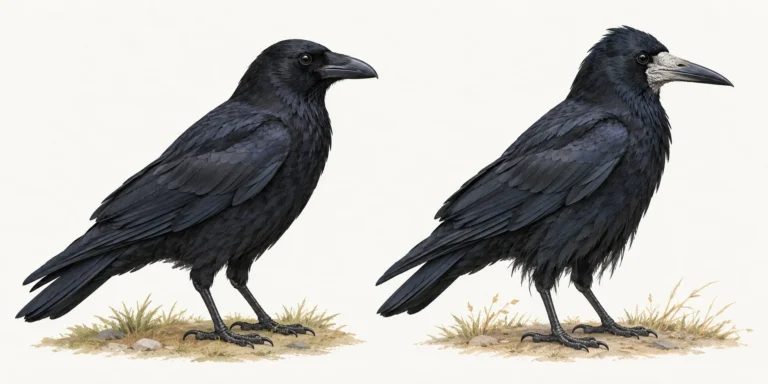
An adult rook has a pale bare patch around the base of its slimmer bill; a carrion crow has an all-black face and a heavier black bill. Young rooks and…
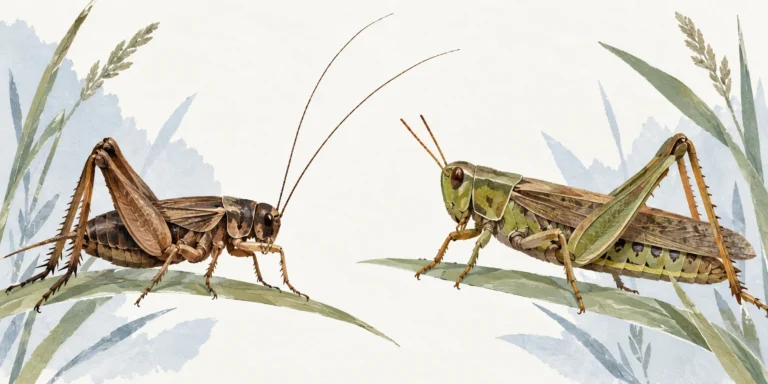
Crickets, including British bush-crickets, tend to have long antennae; grasshoppers have shorter antennae. Both jump, and colour alone is an unreliable guide.