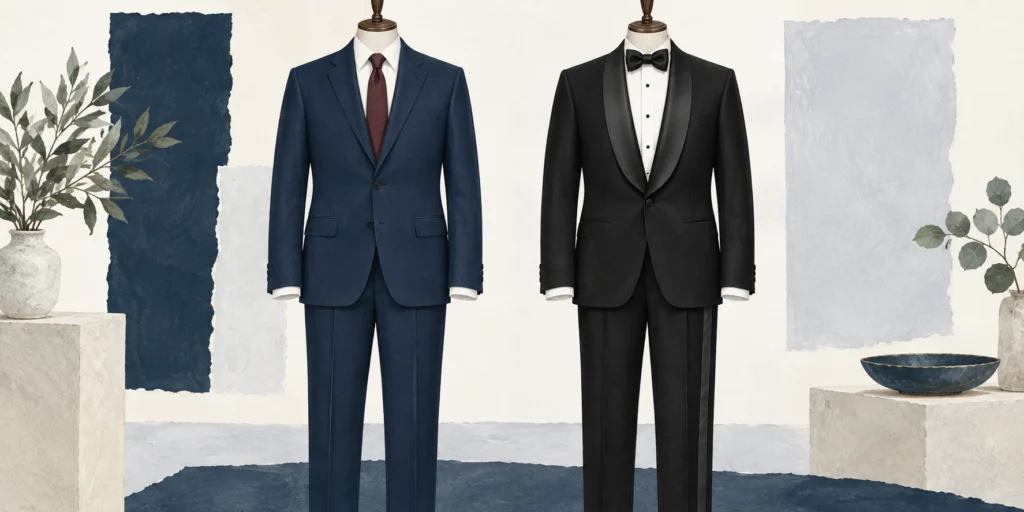
A tuxedo is formal evening tailoring with contrasting lapel facings and matching dress trousers. In the UK it is the conventional choice for black tie.
A tuxedo is formal evening tailoring, usually distinguished by contrasting satin or silk lapel facings and coordinating dress trousers. An ordinary suit generally has lapels in the same cloth as its jacket. In the UK, a conventional black-tie invitation calls for the dinner-jacket ensemble. [1][2]
Here, suit means an ordinary lounge or business suit, while tuxedo means the familiar formal evening outfit. A tuxedo is itself a kind of suit; the useful comparison is between those two styles, not between “a suit” and something unrelated.
Black tie names a dress code, not simply the colour of a necktie. In traditional British usage, the garment is a dinner jacket; “tuxedo” is the familiar American term, also widely used in UK shopping. A dinner jacket alone is only the jacket: coordinate the trousers and accessories too. [2]
Lounge suit means an ordinary matching jacket and trousers, rather than eveningwear. It can be a smart choice for a daytime occasion. A wedding is not automatically black tie: the wording on its invitation determines which of these conventions is relevant. [2]
Read the invitation before choosing the jacket
“Black tie”: start with a dinner jacket and coordinating dress trousers.
“Lounge suit”: start with an ordinary matching suit.
Ambiguous or themed wording: ask the organiser what that event expects.
This is a guide to the conventional terms, not a claim that every host follows the same styling rules. [2]
An original outfit check
Suppose Sam owns a dark navy business suit and receives two invitations. The afternoon reception says “lounge suit”: the matching navy jacket and trousers fit that category. The evening dinner says “black tie”: Sam instead needs the formal evening ensemble specified by that convention. [2]
Adding a black bow tie to the navy business suit changes the accessory, but not the jacket’s lapel facing or the trousers. Conversely, a satin-faced dinner jacket worn with unrelated casual trousers is not the complete conventional black-tie outfit. Think in terms of the ensemble rather than buying one recognisable item. [1][2]
Which details matter less than you might think?
Button count is a clue, not a definition. Both styles can be double-breasted, and cut or fit does not turn a suit into a tuxedo. Colour alone is also insufficient: a black business suit is still an ordinary suit if its construction and styling belong to that category. [1]
For a conventional British black-tie outfit, choose a white evening shirt with a turn-down collar; a wing collar is not required. A cummerbund is optional. If using a waistcoat, do not add a cummerbund as well. [1][2]
Test three wardrobe choices
1. Navy same-cloth lapels, matching trousers, straight tie?
An ordinary suit combination. Navy is not the deciding clue; the untrimmed suit construction and accessories are. [1][2]
2. Satin-faced dinner jacket, braided trousers, white evening shirt and black bow tie?
A conventional black-tie ensemble. Check fit and the event wording after identifying the right category. [2]
3. Black business suit plus black straight tie: does that mean black tie?
No. The phrase denotes eveningwear as a whole. A tie’s colour alone cannot establish compliance with the dress code. [1][2]
Frequently asked questions
Must a tuxedo have a shawl collar?
No. Shawl and peaked lapels are conventional options; the illustration shows one option rather than the only correct shape. [2]
Should I hire or buy one?
That depends on how often you will wear it, fit and the actual quote. Identify the required outfit first, then compare the complete hire or purchase package; this guide does not assume a price advantage.
Sources
Sources checked on 10 October 2026. Worked examples and exercises were written for this article.
AI tools assisted with drafting and the featured editorial illustration. The illustration is not a photograph, measurement or test result. Claims were checked against the linked sources; no independent human expert review is claimed.
Eau de toilette is generally a lighter fragrance expression; parfum names a more concentrated one. Compare the actual version as well as the label: a shared line name does not…
BIAB is a branded builder-gel system used to add structure. An ordinary gel-polish manicure mainly adds colour. Builder gel and colour gel can be used together.
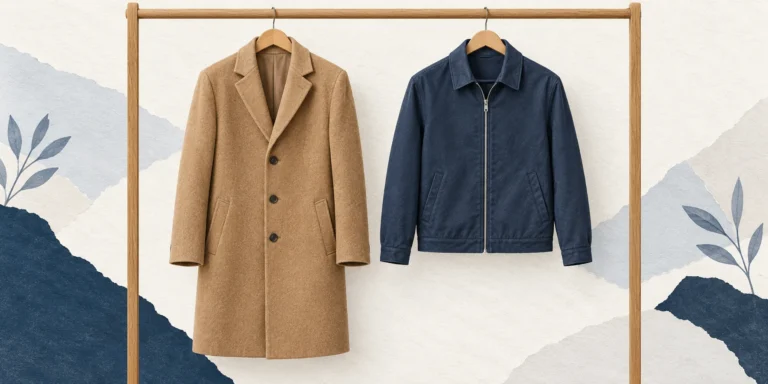
A jacket is usually a shorter upper-body garment; coat is a broader outerwear term that includes long and short styles. Length is a useful clue, but neither word guarantees warmth…