Soda water vs sparkling water: what’s the difference?
Both are fizzy water. In the UK, soda water commonly means a mixer with added mineral salts, while sparkling mineral water has minerals from its source.
Both soda water and sparkling water contain bubbles of carbon dioxide. In UK shopping, soda water commonly describes a mixer with added mineral salts; sparkling water is a broader description of fizzy water. Sparkling natural mineral water gets its mineral composition from its source, but its bubbles may be added during bottling. The categories overlap, so the ingredients and product description matter more than the word “sparkling” alone. [1][2][3]
This guide concerns plain, unsweetened products. To make the comparison concrete, it uses two UK examples: Fever-Tree Premium Soda Water and Buxton Sparkling Natural Mineral Water. Their published compositions illustrate the distinction; they do not define every bottle on the shelf. [1][2]
Mineral analysis includes sodium 24 mg per litre and bicarbonate 248 mg per litre; these are not salt values [1][2]
Sugar and energy in these plain versions
0 g sugars and 0 kcal per 100 ml
No calories; sold as plain mineral water [1][2][3]
Can appearance distinguish them?
Clear, bubbly water
Also clear, bubbly water: read the label rather than guessing from the glass
Natural minerals do not mean natural bubbles
“Natural mineral water” describes the water, rather than promising that every bubble came from underground. Buxton’s sparkling version is made by chilling the water and adding carbon dioxide under pressure. Its water is sourced from St Ann’s Spring in Buxton, Derbyshire. [3]
Nor does added bicarbonate make soda water the only fizzy water containing bicarbonate. The mineral analysis of the example sparkling water includes it naturally. The useful distinction is what is already in the source water and what is added, not “minerals versus no minerals”. [1][2]
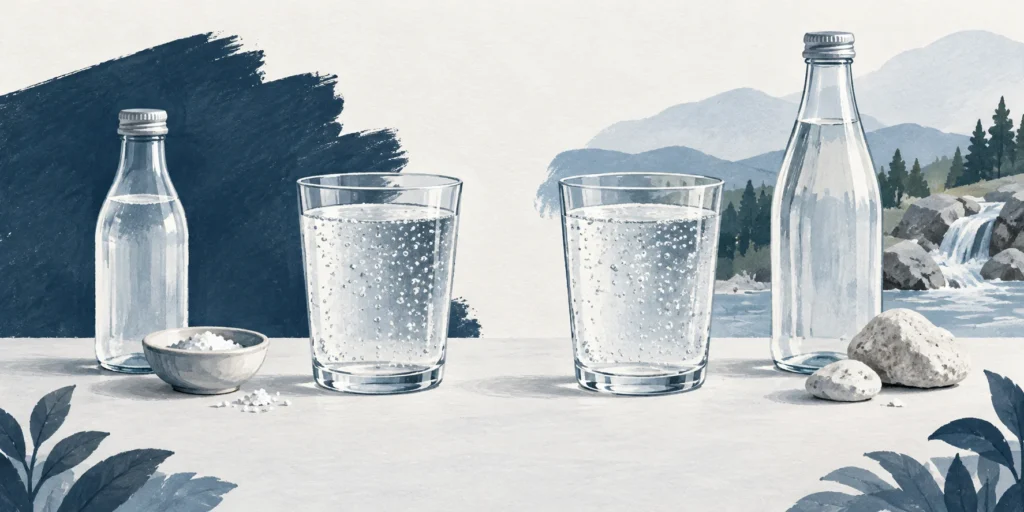
The illustration uses a salt dish and limestone as visual cues for those two routes. Dissolved minerals do not appear as visible salt crystals in the glass. It is a metaphor for the label information, not a photograph of an ingredient experiment.
A three-step bottle check
Read the full name: plain soda water, sparkling natural mineral water, tonic or a flavoured drink?
Read the ingredients: are salts, sugar, sweeteners or flavourings added?
Compare like units: per 100 ml with per 100 ml, and salt with salt. A sodium value is not a salt value.
Can you substitute sparkling water for soda water?
For a simple drink whose fizzy component supplies water and bubbles, plain unsweetened sparkling water is a practical substitute to try. Keep the same volume first. It preserves the dilution, though it does not guarantee an identical mineral profile or sensory result. If a recipe depends on a particular mixer’s flavour or carbonation, the product choice matters more.
For an original alcohol-free example, mix 40 ml cordial with 160 ml plain fizzy water. That gives 200 ml before adding ice, at a cordial-to-water ratio of 1:4. Replacing 160 ml soda water with 160 ml plain sparkling water keeps that ratio and volume; replacing it with a sweetened drink changes another ingredient as well.
For the specified soda product, 160 ml contributes 0.08 g salt: 0.05 g per 100 ml × 1.6. This is a label-based calculation, not a recommendation about salt intake. You cannot compare that number directly with a mineral-water sodium value in mg per litre. [1]
Try three bottle decisions
1. The recipe needs 160 ml soda water and I have plain sparkling water.
For the worked cordial example, use the same 160 ml to preserve the 1:4 ratio and 200 ml total before ice. Check that the substitute is plain and unsweetened; equal volume does not promise identical taste or bubbles.
2. Can I pick tonic because it also looks clear and fizzy?
Check the ingredients first. The regular Indian tonic example contains sugar and quinine flavouring; it is not equivalent to plain water. Its published sugar value is 7.4 g per 100 ml, or 11.84 g in 160 ml. The light version is a different recipe. [4]
3. Does natural mineral water mean the bubbles were never added?
No. In the example product, carbon dioxide is added before filling. Naturally occurring minerals and added carbonation can coexist. [2][3]
Frequently asked questions
Is soda water always saltier than sparkling water?
The names alone cannot establish that ranking. Soda recipes differ, and mineral waters have different mineral analyses. Compare the exact products, the same measurement and the same volume. The examples here do not represent every brand. [1][2]
Does sparkling water mean tonic water?
No. The tonic example is a flavoured drink containing quinine and sugar. Check its own ingredients rather than treating every clear carbonated drink as plain water. [4]
Sources
Sources checked on 15 October 2026. The worked examples and exercises were written for this article.
AI tools assisted with drafting and the featured editorial illustration. The illustration is not a photograph, a measured scientific diagram or evidence of a product test.
Lamb and mutton are sheep meat from different age groups. Mutton comes from older sheep and has a fuller flavour; the cut, provenance and cooking method matter alongside age.
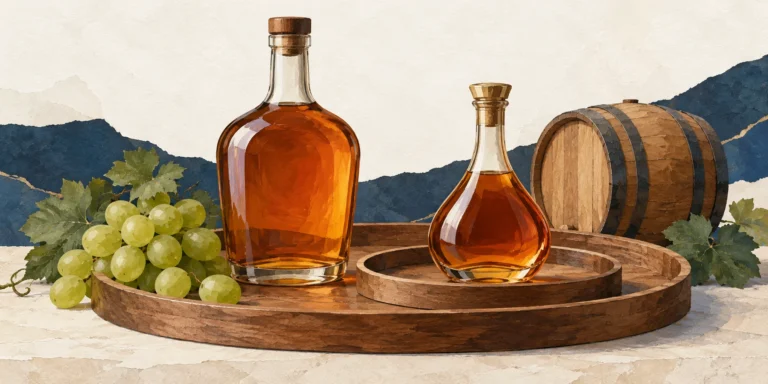
Cognac is a specific member of the broader brandy family, defined by its French origin and production requirements. The word brandy alone does not establish Cognac origin or age.
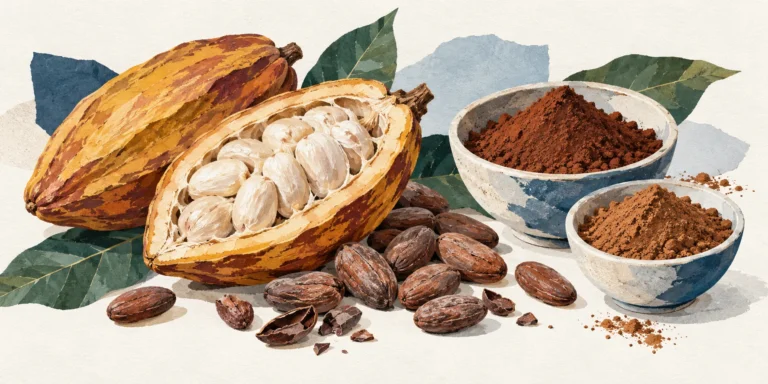
Cacao and cocoa come from the same plant, and the names overlap. For cooking, the useful distinction is the actual product: nibs or powder, and natural or alkalised cocoa.