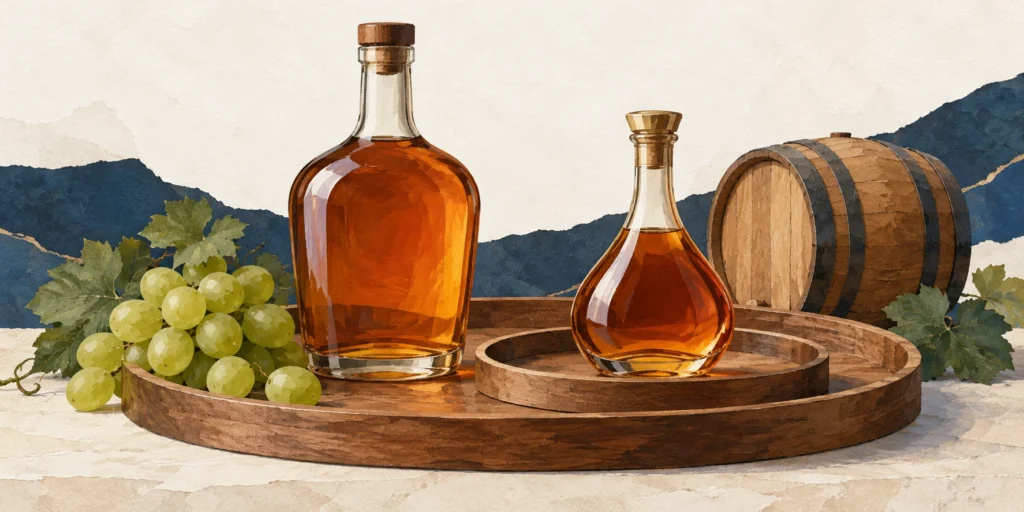
Cognac is a specific member of the broader brandy family, defined by its French origin and production requirements. The word brandy alone does not establish Cognac origin or age.
Cognac is a specific kind of brandy in the everyday drinks family. It comes from a defined area of France and follows its own grape, distillation and ageing requirements. Brandy is the broader term: a bottle described as brandy is not automatically Cognac. In the UK register, Cognac is specifically protected as a geographical indication under wine spirit. [1][2][4]
Read the actual product’s specification and age wording.
At least two years in oak before sale as Cognac. [3]
UK registered name
Brandy alone does not establish the Cognac geographical indication.
Cognac is registered as a protected wine-spirit name. [4]
Origin and method go together
Cognac is more specific than “French brandy”. Its grapes and wine come from the defined area; the wine undergoes two stages of distillation in the Charentais process, followed by maturation in oak. Being made somewhere in France is therefore not enough on its own. [2]
The distinction explains the category relationship without ranking the drinks. A broader family can contain many styles. A specific origin tells you about identity and production, not whether you personally prefer every example of it.
Read the category, then the extra detail
Brandy family: the broad everyday description.
Cognac: a particular protected origin and production specification within that discussion.
Age category: additional information about the youngest spirit in the Cognac blend.
Colour and bottle shape cannot supply those missing label details.
What VS, VSOP and XO mean on Cognac
The age refers to the youngest wine spirit in the blend. Common categories are VS: at least two years; VSOP: at least four years; XO: at least ten years. These are minimum ageing thresholds, not the average age of everything in the bottle. [3]
A worked blend example
Imagine equal amounts of two otherwise suitable spirits aged four years and twelve years. Their simple arithmetic average is (4 + 12) ÷ 2 = eight years. The youngest component is still four years.
That blend cannot satisfy a ten-year XO minimum by averaging the ages or by pointing to the older component. It meets the four-year age threshold associated with VSOP, while any actual label also needs the other applicable Cognac requirements. This is an invented age-reading example, not a real producer’s recipe. [3]
Keeping the bottle for another six years would not turn its four-year cask-age component into ten-year cask-aged spirit. Cognac retains the age it had at bottling. [2]
Try the label checks
A bottle says brandy and was made in France. Have I established that it is Cognac?
No. France is broader than the Cognac area, and the specific origin and production requirements still matter. [2][4]
A Cognac blend contains a twelve-year-old spirit and a four-year-old spirit. Is its youngest component twelve?
No. Its youngest component is four years. The older spirit does not remove that lower age. [3]
Would keeping that bottled blend for six more years add six years of cask ageing?
No. Time in the bottle does not add to the age the Cognac had at bottling. [2]
Frequently asked questions
Are brandy and Cognac two unrelated drinks?
No. Cognac sits within the broader brandy family in ordinary usage. The useful extra information is its protected identity and production specification. [1][4]
Sources
Source pages checked on 26 October 2026. The examples and self-checks were written for this article with AI assistance and checked against the listed material.
Lamb and mutton are sheep meat from different age groups. Mutton comes from older sheep and has a fuller flavour; the cut, provenance and cooking method matter alongside age.
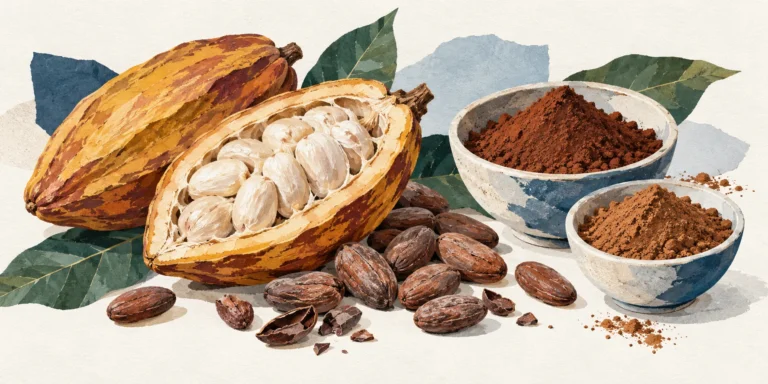
Cacao and cocoa come from the same plant, and the names overlap. For cooking, the useful distinction is the actual product: nibs or powder, and natural or alkalised cocoa.
Baking soda and bicarbonate of soda are two names for the same cooking ingredient: sodium bicarbonate. Baking powder is a different mixture, so that is not the same name-only swap.