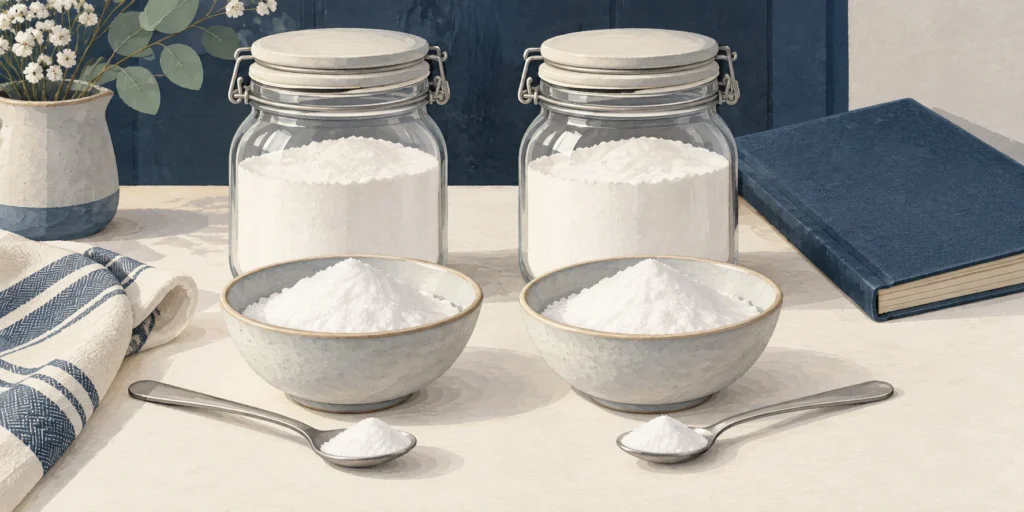
Baking soda and bicarbonate of soda: are they the same?
Baking soda and bicarbonate of soda are two names for the same cooking ingredient: sodium bicarbonate. Baking powder is a different mixture, so that is not the same name-only swap.
Yes. In cooking, baking soda and bicarbonate of soda are two names for the same ingredient: sodium bicarbonate. A British pack marked bicarbonate of soda is the ingredient a recipe means by baking soda. Baking powder is a different mixture, so do not treat that as another interchangeable name. [1][2]
Alkaline raising ingredient, used with an acidic partner. [2]
The same role; the longer name does not make it a different strength. [1]
Name-only recipe swap
Keep the recipe’s amount and measuring unit.
Keep the same amount when it is the same food-use ingredient. [1]
Different from baking powder?
Yes: baking powder includes additional components. [2]
Yes: the distinction is unchanged by the name. [1]
A practical cupboard check
Suppose an invented recipe says one level teaspoon of baking soda, and your baking cupboard contains a food-use pack labelled bicarbonate of soda. Read the pack to confirm the ingredient. You can then follow that instruction as one level teaspoon of bicarbonate of soda. You have translated the name, not reformulated the recipe. [1]
There is no reason to double or halve that amount merely because the British pack uses a longer name. Equally, the example does not convert a teaspoon into grams: if the recipe gives a weight, follow that weight. These are reading checks, not a tested baking formula.
Why baking powder causes the confusion
Baking soda provides the alkaline component of a raising reaction. With an acidic ingredient, it releases carbon dioxide. Baking powder includes both alkaline and acidic components, so it is a prepared mixture rather than another name for plain bicarbonate. [1][2]
That difference explains why a recipe can list both. Seeing baking soda and baking powder in one ingredient list does not mean you should combine their quantities into one entry. Follow the recipe’s separate instructions. [2]
Read the name before changing the recipe
Baking soda or bicarbonate of soda? Confirm the same food-use ingredient on the pack.
Only the name differs? Keep the stated quantity and unit.
Baking powder instead? It is a different mixture; a name-only swap no longer applies.
An unlabelled white powder cannot be identified reliably by how it looks.
Check the recipe wording
The recipe asks for baking soda; my pack says bicarbonate of soda. Is that the right ingredient?
Yes, if it is the food-use bicarbonate ingredient. They are two names for the same thing. [1][2]
Should one teaspoon become two because I am using bicarb?
No. The name change does not alter the ingredient or create a new substitution ratio. Keep the same stated measure. [1]
My only pack is baking powder. Is that the same name swap?
No. Baking powder is a mixture with additional components. It is not a second label for plain baking soda. [1][2]
Frequently asked questions
What does bicarb mean in a baking recipe?
It is a shortened form of bicarbonate of soda. Check the full ingredient name on the food-use pack when buying it. [1]
Sources
Source pages checked on 25 October 2026. The examples and self-checks were written for this article with AI assistance and checked against the listed material.
Lamb and mutton are sheep meat from different age groups. Mutton comes from older sheep and has a fuller flavour; the cut, provenance and cooking method matter alongside age.
Cognac is a specific member of the broader brandy family, defined by its French origin and production requirements. The word brandy alone does not establish Cognac origin or age.
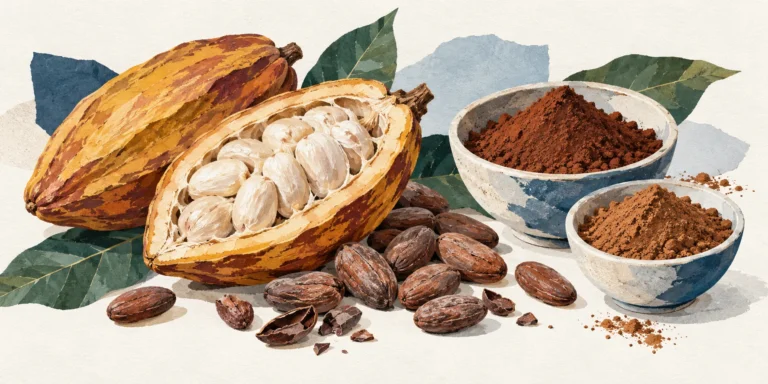
Cacao and cocoa come from the same plant, and the names overlap. For cooking, the useful distinction is the actual product: nibs or powder, and natural or alkalised cocoa.