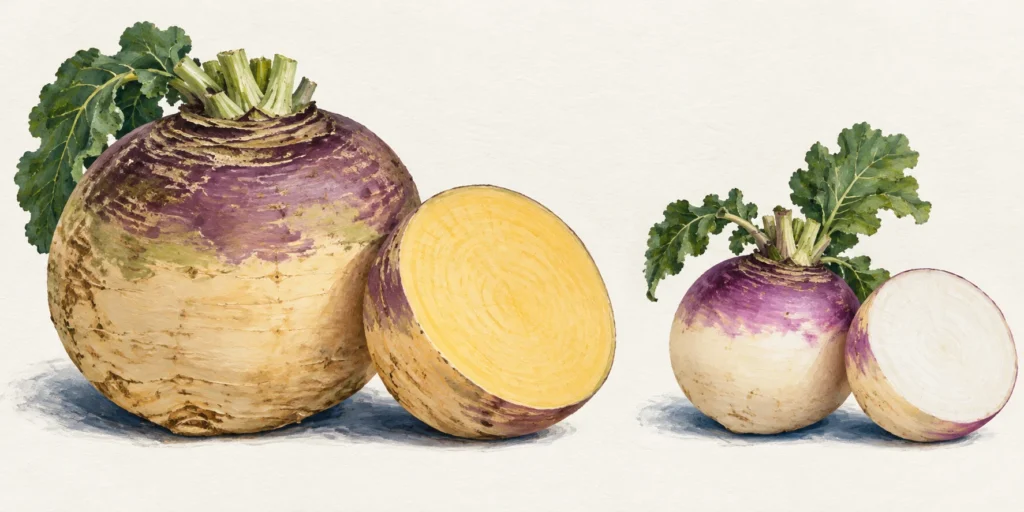
Swede is usually a larger, yellow-fleshed root; turnips are generally smaller and often white-fleshed. Regional names, especially Scottish neeps, can blur the distinction.
Swede and turnip are related but distinct vegetables. Swede is usually larger, with yellow flesh and a sweet, nutty flavour when cooked; turnips are generally smaller, with more varied colours and often white flesh. In Scotland, “turnip” or “neeps” may mean swede. [1][2][3]
Here, turnip means the cultivated vegetable usually sold under that name in British shops, rather than every regional use of the word. The familiar purple-topped examples are useful starting points, but colour alone cannot settle the question.
“Turnip” needs regional context when reading a recipe. [1][2]
Why a purple top is not enough
Both vegetables can have purple shoulders. A swede’s yellow cut flesh is a useful clue for the common shop types, while a small white-fleshed root is a familiar turnip. Yet turnip cultivars include red-skinned roots and yellow forms, so treat those clues together with the label. [1][2]
They are not simply a young and an old version of one plant: their botanical identities differ. A large turnip does not become a swede. [1][3]
Choosing one for a recipe
Suppose your shopping list says “neeps for a yellow mash”. Choose a labelled swede rather than selecting any purple-topped root. If the plan is a crisp raw salad, look for a young salad turnip instead. Those choices use the intended dish as well as appearance. [1][2]
For a stew, either can be workable, but substitution changes the ingredient rather than preserving exactly the same flavour and texture. Check the recipe’s wording: some neeps recipes explicitly allow turnips or swedes and cook them until tender. Follow that endpoint rather than assuming every root, cut size and pan needs an identical number of minutes. [4]
Recipe decision path: name, label, then intended texture
Read the context: does “turnip” mean Scottish neeps or a small salad root?
Check the label: swede and turnip are different crops.
Match the dish: yellow cooked mash suggests swede; a crisp salad suggests a young salad turnip.
This is a shopping and recipe guide, not a wild-plant identification key. [1][2][3]
Try the ingredient choices
A Scottish recipe says turnip: must I buy the small white root?
No. The word can refer to swede in Scotland. Read the ingredient description and intended result; “neeps” alone does not guarantee that every writer means the same crop. [1][4]
Both roots have purple shoulders: have I found the same vegetable twice?
Not necessarily. Purple tops occur in both. Check the shop label and the cut flesh, while remembering that cultivars vary. [1][2]
I want raw crunch: is a very large root the best turnip?
Young turnips, including salad types, are the more useful starting point. Bigger is not automatically better: overgrown turnips can become woody. [2]
Frequently asked questions
Is rutabaga another name for swede?
Yes. Rutabaga is the name commonly used for swede in the US. [1]
Can turnips taste sweet?
Yes. Young turnips and named salad varieties can be sweet and crisp, so “swede is sweet, turnip is always bitter” is too crude. [2]
Sources
Source pages checked on 20 October 2026. The examples and self-checks were written for this article with AI assistance and checked against the listed material.
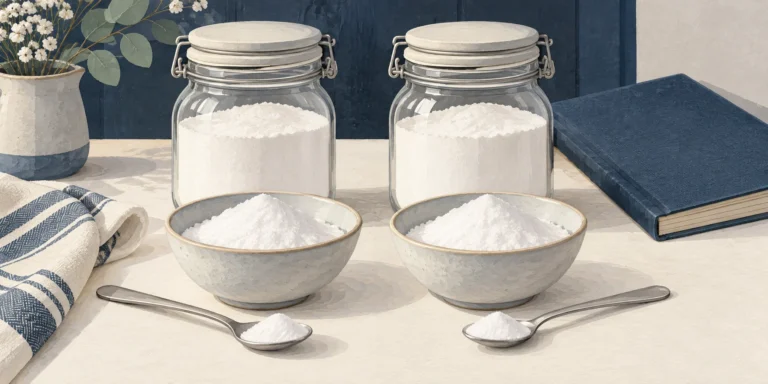
Baking soda and bicarbonate of soda are two names for the same cooking ingredient: sodium bicarbonate. Baking powder is a different mixture, so that is not the same name-only swap.
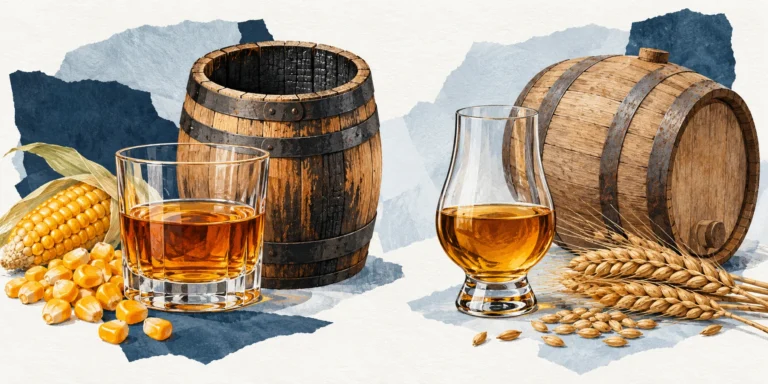
Bourbon is a type of American whiskey, made with at least 51% corn and stored in new charred oak. Whiskey is the wider family, whose named styles follow different rules.
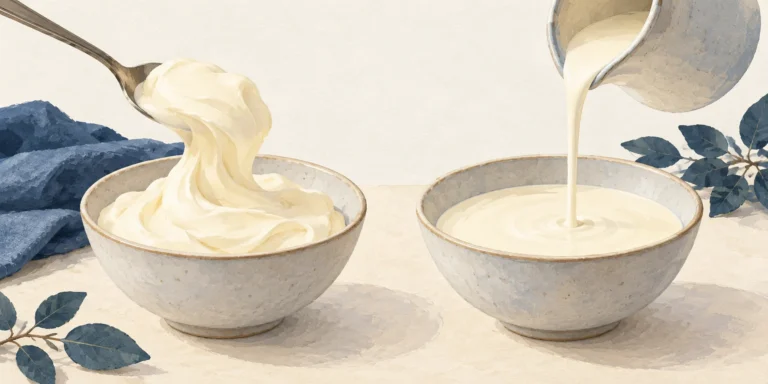
British double cream is typically around 48% fat and can be whipped; single cream is around 18% and is used for pouring or enriching dishes. They are not interchangeable in…