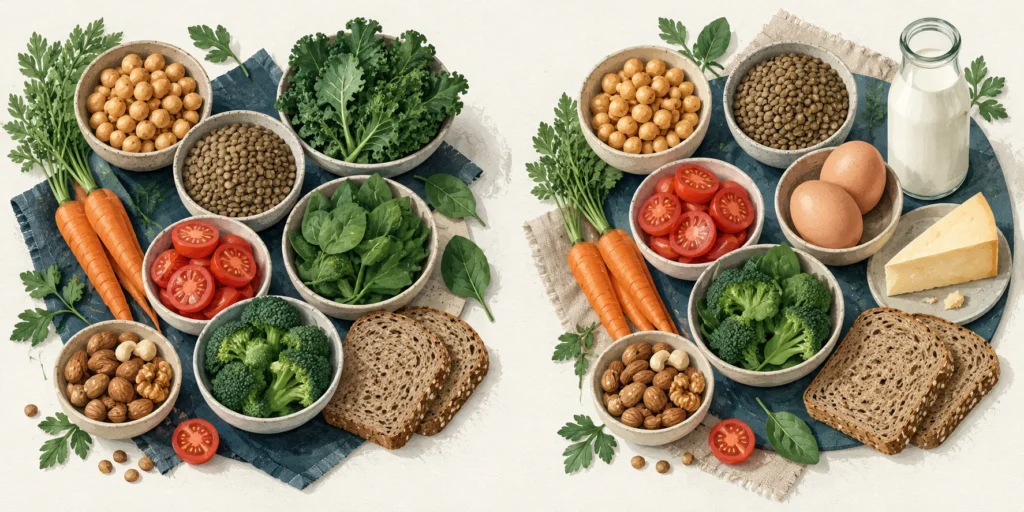
Vegetarian food excludes meat and fish but may include eggs and dairy. Vegan food excludes animal-derived ingredients. Vegan labels are not allergy guarantees.
Vegetarian food excludes meat, poultry, fish and seafood, but may include eggs and dairy. Vegan food excludes animal-derived ingredients, including eggs, dairy and honey. A vegan label describes the ingredients intended for the food; it does not guarantee that the food is free from animal allergens. [1][2][3][4]
Here, the everyday comparison is between a vegan diet and a lacto-ovo vegetarian diet, which permits dairy and eggs. Other vegetarian patterns exist, so “may include” matters: permission to eat an ingredient does not mean that every vegetarian eats it. [4]
A meat-free dish can still contain milk, butter, cheese or eggs. That can fit a lacto-ovo vegetarian diet but not a vegan diet. Fish is not a vegetarian exception in the definition used here: a pattern that includes fish is usually described as pescatarian. [1][2][4]
Ingredients that are less obvious also matter. Animal gelatine and animal rennet are excluded from vegetarian food. A cheese can be made with a suitable alternative to animal rennet, so its ingredients or vegetarian suitability information can make a practical difference. “It is cheese” is not enough to settle that question. [4]
A simple ingredient decision route
Meat, poultry, fish, seafood, animal gelatine or animal rennet? It does not fit the vegetarian comparison here.
None of those, but eggs, dairy or honey? It can be vegetarian, but is not vegan.
No animal-derived ingredients? It can fit vegan food; assess allergen information separately.
This route describes ingredients, not a certification or a nutritional assessment. [1][2][3][4]
A worked meal example
Take a meal made only from lentils, tomatoes, onion, olive oil, herbs and water, served with pasta made only from wheat and water. Those stated ingredients fit both descriptions. Add a dairy cheese made with vegetarian rennet: the meal remains vegetarian but stops being vegan. Replace it with a topping containing only nuts, salt and nutritional yeast: the stated meal fits vegan ingredients again. [1][2][4]
This example depends on the ingredients being as described. Egg pasta changes the answer; so does chicken stock in an otherwise vegetable-based sauce. For a packaged product, read its actual information instead of relying on the dish’s name.
Vegan is different from allergen-free
In the UK, a vegan claim does not guarantee the absence of milk, egg or other animal allergens. Cross-contamination can occur even when animal-derived ingredients are not deliberately used. A vegan product can therefore carry a “may contain milk” warning. Read the ingredients and allergen information separately; the vegan claim does not replace them. [3]
Veganism can also describe a wider way of living that seeks to avoid animal exploitation as far as possible and practicable. Choosing a vegan meal describes that meal; it does not by itself tell you everything about someone’s clothing, other purchases or beliefs. [1]
Try three menu decisions
1. Egg pasta with a tomato sauce containing only plant ingredients?
Vegetarian, but not vegan. The egg is the deciding ingredient for this comparison. [1][2][4]
2. Vegetable soup made with chicken stock?
Neither. An animal meat-based stock does not become vegetarian because the visible pieces are vegetables. [1][2][4]
3. A vegan snack says “may contain milk”: is the label an allergy guarantee?
No. The vegan claim and the precautionary allergen information answer different questions. [3]
Frequently asked questions
Does vegetarian always mean eggs and dairy are included?
No. Lacto-ovo vegetarian permits both, whereas lacto-vegetarian permits dairy but excludes eggs. An individual may also choose not to eat particular permitted foods. [4]
Is honey vegan?
It is excluded from the vegan definition used here. It may be eaten in a vegetarian diet. [1][2]
Sources
Sources checked on 11 October 2026. Worked examples and exercises were written for this article.
AI tools assisted with drafting and the featured editorial illustration. The illustration is not a photograph, measurement or test result. Claims were checked against the linked sources; no independent human expert review is claimed.
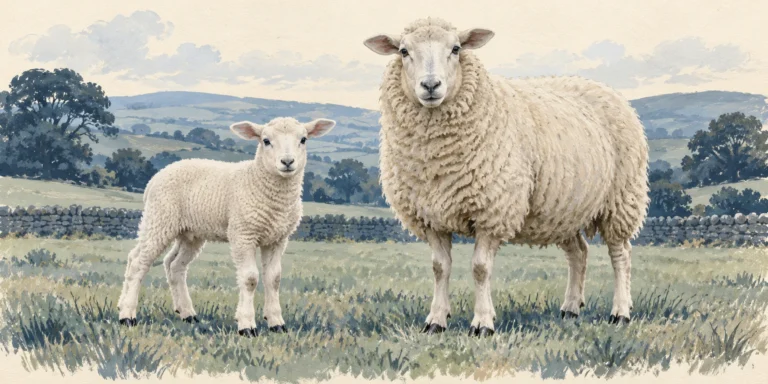
Lamb and mutton are sheep meat from different age groups. Mutton comes from older sheep and has a fuller flavour; the cut, provenance and cooking method matter alongside age.
Cognac is a specific member of the broader brandy family, defined by its French origin and production requirements. The word brandy alone does not establish Cognac origin or age.
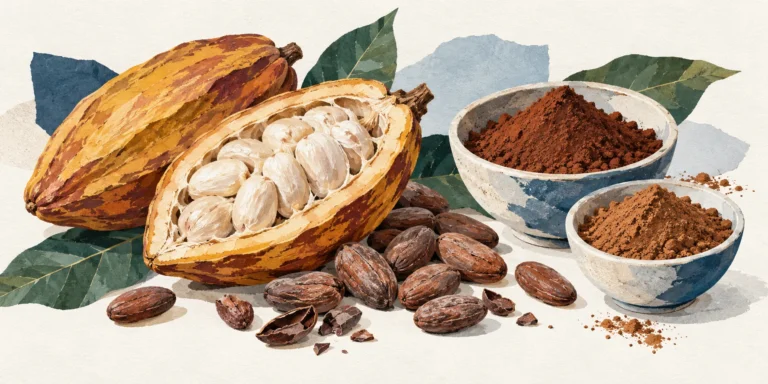
Cacao and cocoa come from the same plant, and the names overlap. For cooking, the useful distinction is the actual product: nibs or powder, and natural or alkalised cocoa.